Class of 2031: Yes, My Son with Down Syndrome Can Go to College

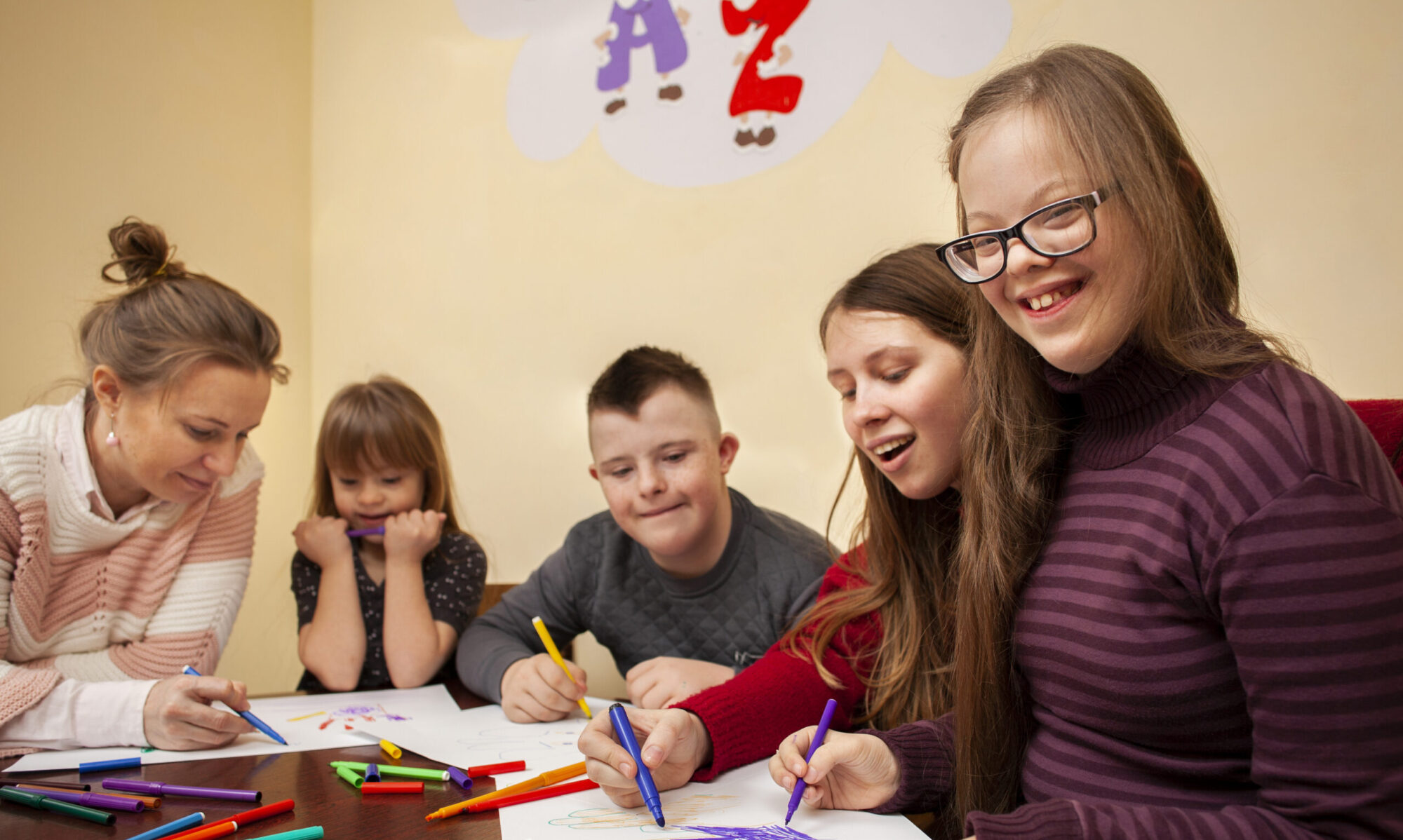
With over 260 college options, the future is looking bright for students with intellectual disabilities.

I can see the headline now: “Twin Brothers Graduate Side-by-Side, Accepted at the Same College”.

I can see my precious boys, now men, stepping onto the platform hand-in-hand, receiving their diploma’s together.

The year is 2031, and it’s the culmination of years of hard work, as well as the beginning of years of hard work to come.

But why is this even news, you ask. After all, twins graduate side-by-side every spring.

What if I told you my twin boys are so unique that the odds of recreating another birth like them is 14 in a million! I know, I know…I should play the lottery.

But this alone isn’t even newsworthy.

The real headliner here is that one boy is neuro-typical, while the other has Down syndrome.

And the truth is, no one expects much out of the latter. No one, except me!

My twin boys will begin kindergarten in a few weeks, and I’m already plotting how to send them to college. Of course, like most parents, my husband and I have done the dutiful task of setting up a 529 College savings plan for our typical son and daughter.

But doing the same for Troy, who has Down syndrome, would put his future SSI Medicaid benefits at risk. Luckily for Troy, the Achieve a Better Life Experience (ABLE) Act, was just passed in 2014, and now he can save for college too without losing much needed government assistance. Read more about ABLE here.

So, now to investigate college programs.

I know, we’re 14 years out…What can I say? I’m a bit of an obsessive planner. Ok, ok I’m neurotic. I can’t help it. But my investigation into colleges for my son has amazed me!

Did you know there are over 260 college options for Troy, and other people with intellectual disabilities? And he can receive pell grants, work study money, and scholarships to help pay the tuition.

The evolution to better higher education opportunities for people with intellectual disabilities really took off with the reauthorization of the Higher Education Opportunity Act of 2008. But keep your eyes and ears peeled (and your legislator on speed dial), because the act is supposed to be reauthorized again THIS YEAR!!! We can’t go backwards.

And on closer look, I noticed that these college programs are not created equal.

They range from Syracruse’s InclusiveU Program (learn more here), which boasts a 4-year certification program where students take the same exact classes as their neuro-typical peers and live with those peers too….to others where students are completely segregated and only learn life skills. Unfortunately, the vast majority of these college programs fall into the latter category.

Now, I’m not complaining. At least higher education, any higher education, exists for my son. But I’m not going to fight for 13 years for my son to be included with his typical twin brother in primary and secondary education, just to turn around and fight again in higher education.

We need to be advocating for more programs like InclusiveU. We also need the Higher Education Opportunity Act passed with more, not less funds for inclusive higher education.

My hope is by the time Troy and Hunter graduate high school in 2031, most higher education programs will be fully inclusive and lead to competitive paying jobs.

Visit thinkcollege.net to find out what college programs are in your state, and start advocating for full inclusion.

← Back

Thank you for your response. ✨

From Where We Stand: Perspectives on Fathering a Child with a Disability

Most parents of children with disabilities would agree that at some point along this journey they’ve felt alone, isolated, confused, and scared. Fathers are no different, and many say they share a unique set of concerns, different than mothers. Research shows that disability support services focuses primarily on the needs of mothers, and are predominately provided by women.

This Father’s Day it’s important to recognize the contributions and needs of all the dads that share in this unique journey.

Below are the perspectives of fathers of children with Down syndrome. Make sure you read to the end, to get tips and resources from dads to dads in similar situations.

Read Related Post: Mother’s Day Advice From Moms Who’ve Been There

Brian Herndon, Associate Professor of Elementary Education at John Brown University

“It is interesting being the dad of a child with Down Syndrome. The overwhelming majority of people that I interact with in the disability community are mothers. There seem to be very few, if any, fathers who are actively advocating for their child(ren) with disabilities. I am part of a couple of Facebook pages that are specifically for dads, but they are, honestly, pretty generic. There is one that is called Band of Brothers, and mostly dad’s just post cute pics of their child doing fun things. The Kansas City Down Syndrome Guild has a dad’s group, but I never got involved in it. I get posts and updates, but I don’t do anything with it.

I think I’m a bit of a different kind of dad though because I am also an elementary school educator. So, children are an area of expertise for me. I have never been one to shy away from being around children, even babies. I knew pretty early on that if I didn’t speak up for my child and become knowledgeable about the law that no one else would. My wife would speak up, but I knew that schools would shoot her down pretty quickly and she wouldn’t really know what to do from there. She’s a tough woman, and she would have figured it out for sure. But, she is very comfortable with me being the one to be the strong voice when it comes to schooling and inclusion.”

Erik Weiner, Disability Advocate who’s worked on key disability rights legislation in his state

“Being a father to a child with a disablilty can sometimes be a lonely journey. Not from the aspect of being alone from your spouse but sometimes from the special needs community itself. I remember when we first found out that Devan was born with Down syndrome. Being the type of person that I am I started to reach out to as many groups as I could. As the days and weeks went on I found that many times the groups were mainly run by women and a lot of times when I would ask questions or tried to participate in an online discussion my questions and statements went unanswered. I felt like being a man/father my concerns for my child weren’t “good” enough that it was up to the mom to ask those questions. I will say that there were a few moms that reached out to me and because of that I have formed some great resource/friend relationships. As I moved on in the journey I did find support groups from men but never fully pursued active participation with them for some reason.

All my life I have been in one way or another involved with individuals with all types of disabilities. Whether it was through school, coaching, or personal experiences. So the idea of disability or an individual with a disability was not a new concept. What WAS a new concept was now I WAS that parent with a child with a disability. From the moment we were able to take Devan out on family outings I immediately went into “on guard” mode. Meaning I constantly was looking for someone to give her a second glance, to make a face, laugh at her, to have some say “looked at that retard”. I was on edge and looking for that fight. Not that I was ashamed of her or who are family was, but because I knew there were not so nice people out there. People that don’t see her the way I do. Slowly and I mean very slowly I have been able to push that “feeling” down. Because I truly don’t feel it will ever go away; just stored away in an “in-case of emergency break glass” kinda of thing.”

Mitchel Rothholz, Disability Advocate who brings over 34 years of association management experience to the Down syndrome community

“Fathers sometimes feel isolated because they are trying to figure out their role.  I encourage dads to connect with each other so they have someone going through similar challenges who they can talk to. Attend meetings of your local interest groups, attend the National Down Syndrome Congress (NDSC) convention, volunteer to be a parent-to-parent counselor or work on a committee, visit legislators. Once you engage you will get the bug and realize you are not alone. My wife, Julie, and I complement each other and play off of each of our strengths.  Julie and I have been group facilitators for the sharing sessions at NDSC, and it is interesting to compare notes of what each group discussed. Both are trying to figure out the foreign language they have been thrust into and trying to do what’s right for their kids. Navigating all of the issues can be daunting.

There will always be ups and downs in raising any child, but in raising a child with an intellectual disability the challenges can be amplified.  This is why this is a team sport with each parent supporting each other.  Identify your strengths and take on responsibility for key aspects regarding the needs of your child.  Kids with Down syndrome are no different than other kids – they will find your weak points and exploit those.  Stay strong, consistent, coordinated and support each other.”

Resources For Dads:

https://www.dadsnational.org: D.A.D.S or Dads Appreciation Down syndrome assists and supports fathers of individuals with Down syndrome

National Down Syndrome Congress Convention’s Dad’s Sharing Session. Every summer, during the NDSC’s annual convention, Dad’s breakout by age group to discuss issues common to us all.

Check out your local Down syndrome organization for a local dad’s group. Many are active in their local community.

The Arc also provides Father’s groups in many cities throughout the nation.


The Link Between Sleep and Learning

It wasn’t long ago that dad’s snoring was a family joke. New research is now showing that sleep problems can lead to serious issues, especially for our loved ones with Down syndrome.

Evie is only 5-years-old, and already she’s underwent 7 sleep study.

Evie

“Her first was at 11 months because they were trying to rule out pulmonary pressure issues before doing heart surgery. She had mild apnea then,” says Evie’s mom Jen Alge. This amazing preschooler, who happens to rock an extra chromosome, was found to develop severe obstructive sleep apnea (OSA) in a follow-up sleep study.

Surgery to remove her adenoids and tonsils brought down Evie’s OSA levels to a more moderate range. “A simi MRI (which I highly recommend) showed how obstructed her airway is, so we started Evie on a CPAP (Continuous Positive Airway Pressure),” describes Alge. Evie’s mom is a disability advocate friend of mine, so I’ve heard her talk about their countless sleepless nights. “She does wear it on average 7 hours a night, but that’s only because I’m in her room 5-8 times a night at least putting the mask back on.”

Research out of the University of Arizona links Obstructive Sleep Apnea to cognitive problems. 

“Addressing sleep disruptions may be an overlooked way to improve cognitive outcomes in the Down syndrome population,” says Dr. Jamie Edgin, lead researcher and professor of Psychology and Cognitive Science. The study found that individuals with Down syndrome with OSA had cognitive, memory, language, and behavioral issues.

Edgin’s study of school aged kids found those with untreated OSA had a poor ability to learn new rules, and a 9-point difference in verbal IQ scores compared to their peers with Down syndrome without OSA. “A more recent study of preschoolers with Down syndrome found that those with OSA had fewer words and may limit how well they learn to communicate,” explains Edgin.

It’s estimated that 50-100% of individuals with Down syndrome have Obstructive Sleep Apnea (OSA), and most parents can’t predict whether or not their child has it.

Troy during his sleep study

This is true in our case. I had no suspicion that my son, Troy, had OSA, but took him in for a sleep study at 2-years-old anyway after reading Edgin’s research.

The American Academy of Pediatrics recently lowered their recommended age for completing a sleep study for children with Down syndrome from 8-years-old to 4-years-old. “The earlier we detect the sleep problems the better. There’s a push in the medical community to decide how early and I argue it should be earlier than 4-years-old,” explains Edgin. “A study out of Indiana found that babies as young as 6-months-old showed divergent sleep patterns.”

I’m glad I didn’t wait to take Troy in for a sleep study. At 2-years-old he had moderate sleep apnea. Troy got his adenoids and tonsils removed, which was enough to resolve his sleep apnea. At almost 5-years-old he’s speech has taken off despite his Apraxia diagnosis, although I’ll never know if that’s because we were so proactive in treating his OSA.

Parents should continue monitoring sleep issues even into adulthood. 

“One age group that’s not being studied is adults,” says Edgin. “OSA and other sleep issues has been shown to lead Alzheimers and cognitive declined in typical adults. The same is likely true for adults with Down syndrome. Although they may suffer these declines earlier than their typical peers.”

Edgin recommends that individuals with Down syndrome repeat sleep studies periodically throughout their lifespan. “As people age and put on more weight it can reoccur. Parents need to stay vigilante as they age,” explains Edgin.

Talk to your child’s doctor and decide on a course of treatment that’s best. Not every treatment is meant for every child. 

Goodnight kiss from brother

For our family, surgical removal of aenoids and tonsils was enough to resolve Troy’s OSA for now. Evie’s mom, Jen, says she hasn’t seen any difference in her daughter’s language and behavioral outcomes after using the CPAP, but she still thinks the treatment has been worth it.

“Evie’s always been a smarty pants and she talks all day long so I can’t credit the CPAP for any changes there. I will say she is getting more air and isn’t gasping for breath or snoring with the CPAP on so that’s a relief. The behavior changes might be more long term given her age,” explains Jen Alge.

Remember sleep is likely just one piece of the puzzle when it comes to cognitive, language and behavioral issues.

“Sleep issues alone do not fully explain the extent of language disruption in individuals with Down syndrome. We found that the good sleep group with DS was also impaired in these areas in relation to their typical peers,” explains Edgin.

“It’s important to understand the link between sleep and learning problems, but it’s not the only thing people need to keep in mind. In the end, language interventions may be more beneficial if done in conjunction with sleep interventions,” argues Edgin.

Interested in learning more about 5-year-old Evie’s OSA treatment? Read here.  


Play Nice, Mean Business

Navigating special education often feels like walking a tight rope. If you’re doing it right, you’re likely in a constant battle between preserving parent-school staff relationship and getting what your child with a disability needs. This can feel like an impossible task.

We all know that a perfect Individualized Education Plan (IEP) means nothing if there’s not buy-in from school staff. I would argue that, equally important to a solid IEP, is building strong relationships with your child’s teachers, administrators, and therapists. But how do you do this when you feel forced to challenge their system or mindset to get what your child needs?

Read Related Post: 4 Resources to Help Teachers Include Students with Down Syndrome in General Education

One way is through the power of negotiation. Negotiation may seem like a weird way to build relationships, but stick with me for a moment.

By definition, the word “negotiation” means: a discussion aimed at reaching an agreement. That’s just what Individualized Education Plan meetings are for. As your child’s best advocate, it’s your job to get the best deal for your child; while the school wants to provide an appropriate education that fits their system. Parents need to politely challenge a system that doesn’t put the student’s needs first. We must remind the IEP team of the “I” in IEP. We have to do all of this with grace and respect.

I recently read “Negotiation Genius,” and although it’s for business negotiations the book’s tips work for parent-negotiators too. According to the book’s authors a good negotiator will identify opportunities for a better deal when others see no room for discussion, discover the truth when others may want to conceal it, defuse threats and ultimatums, overcome resistance and “sell” proposals,” and create trusting relationships.

The Individuals with Disabilities Education Act (IDEA) gives parents equal power to use research and evidence to make request that benefit their child. The Family Educational Rights and Privacy Act (FERPA) ensures parents have access to every document that has their child’s name on it (this includes emails, notes between teachers, test booklets, etc). Section 504 and the Americans with Disabilities Act (ADA) both provide broad protections against discrimination of students with disabilities. All of these laws give parents the right to be power brokers in their child’s educational career. It’s up to the parent to overcome resistance and create trusting relationships. The law can only take you so far; it’s relationships that will ensure your child is successful at the end of the day.

So, what about bringing food to IEP meetings, or talking to teachers or administrators outside the IEP meeting about your child, or showering the IEP team with gifts? Some parent advocates say the IEP process should be purely business, and those things don’t belong in a business deal. I fall on the other side of the fence. Most good business deals do in fact include personal connection and gifts. Like it or not, it’s easier to catch flies with honey than vinegar.

Read Related Post: 3 Words that Will Transform Your Next IEP Meeting

This line of thought only goes so far though. It’s likely that at some point you’ll encounter difficult personalities during your child’s special education career. Whether it’s the power-hungry gatekeeper who says no to all your requests or the passive-agressive IEP team member who use sarcasm, stalling, conveniently forgetting, or habitual criticism of your ideas to stonewall the IEP process. Sometimes even being too friendly can lead to a conflict of interest. You may feel like you can’t provide constructive criticism if the staff person has become your friend.

Striking a balance between being nice and getting what your child needs takes thought and practice, but it’s worth your consideration. The bottom line is school district win most due process hearings. Even if a family does win a due process case against a district, in many ways the family still loses. Imagine having to send your child back to a school that fought against you in court. Relationships will surely be damaged. That doesn’t mean you shouldn’t file against a school that violates your child’s right to a free and appropriate education, but it does mean thinking about building relationships from the beginning and using the power of negotiation to help you avoid a no-win situation.

How do you balance parent-school staff relationships with getting the best deal for your child? Share your experiences, good and bad, below.


Music Therapy for Children with Down Syndrome

My 5-year-old son singing Twinkle Twinkle Little Star, while he plays the ukulele. It’s music to my ears! With a dual-diagnosis of Down syndrome and Childhood Apraxia of Speech Troy struggles to speak intelligibly, but somehow he speaks much more clearly while singing.

Speech therapy twice a week, and total speech immersion in an inclusive preschool class has helped Troy make great gains in speech intelligibility. But it’s his love of music and singing that has continued to show me where we should place our efforts.

Music therapy can seem frivolous, but research supports connections between speech and singing, rhythm and motor behavior, memory for song and memory for academic material. Music is processed by a different area of the brain than speech and languages, so a child may be able to more easily absorb information and skills presented with music.

“Music organizes the brain. The child strums the instrument with his right hand, which stimulates the left side of the brain. The left side of the brain is the center of language and speech, which is one reason Troy can speak more clearly,” explains my son’s Music Therapist, Kendra Carson. Kendra has been a certified practicing Music Therapist for 16 years, and has worked with all ages.

Read related post here: Teaching Your Child with Down Syndrome to Read

Kendra says music therapy isn’t about music production. “Music is just the tool I use as a therapist to see what Troy’s non-musical needs are and facilitate non-musical goals,” Kendra says. She incorporates Troy’s speech goals into each session, and many songs like “Old McDonald” incorporate sounds and words that Troy struggles with as a child diagnosed with Childhood Apraxia of Speech.

The American Music Therapy Association defines music therapy as “an established health profession in which music is used within a therapeutic relationship to address physical, emotional, cognitive, and social needs of individuals. After assessing the strengths and needs of each client, the qualified music therapist provides the indicated treatment including creating, singing, moving to, and/or listening to music.”

Even if you don’t have the time or money for private music therapy, you can incorporate music into your daily life to benefit your loved one with Down syndrome. Kendra taught me how to put familiar books to music. For example, Troy has memorized the book Brown Bear, Brown Bear. When we sing the words in the book to the tune of Twinkle, Twinkle, Little Start he can read the book more fluidly. I’ve also helped my children learn my phone number and our address by putting them two easy tunes.

Read Related Post Here: Travels of a Posterior Walker

This doting sister shown below shows off her natural music therapy skills in a social media video that’s gone viral. She shares the joy of music to help her toddler brother with Down syndrome learn to speak his first words. Check it out!

As a parent of child with Down syndrome, I understand that fitting one more therapy in can seem impossible. But many music therapists will come to you, and many local Down syndrome affiliates or county developmental disability boards offer scholarships to families for therapies and other activities.

You can find out more about Music Therapy and find a certified therapist in your area HERE. Does your loved one with Down syndrome love music? How have you facilitated this love of music to help him or her in other areas of life? Share your story with me below.