Everything I Need to Know About Inclusion I Learned in Preschool

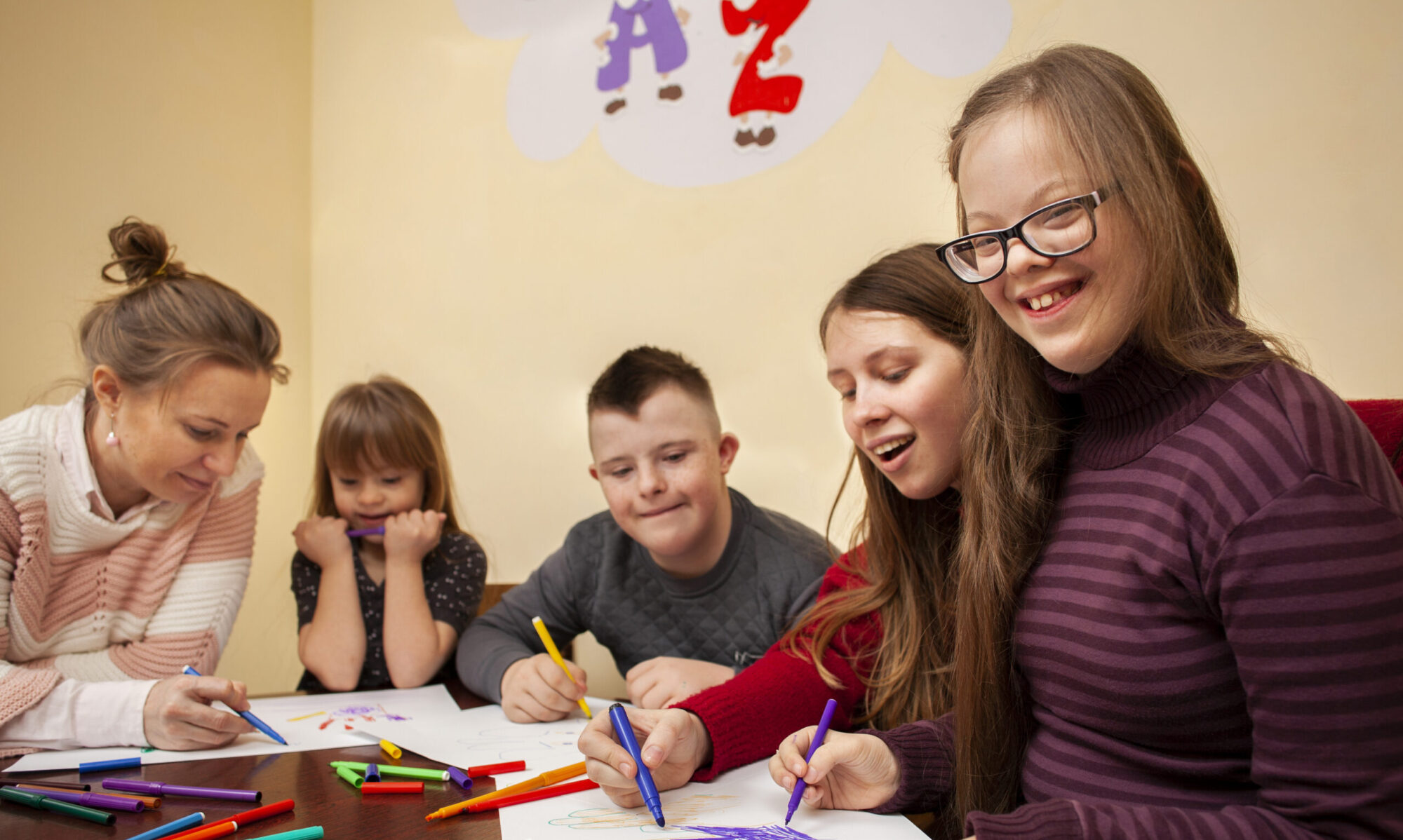
The sign over my twin sons’ preschool states: “Where Wonder Begins.” I was filled with euphoria reading those words three years ago, when the boys were starting preschool just shy of 3-years-old. I believed I had hit the jackpot. An inclusive public preschool for my son with Down syndrome right out the gate. A place where he would not only belong, but would thrive in “wonder.”

My husband always giggles when we walk past the sign for an IEP meeting. He jokes that no sign could ever match my idealism and pragmatism of inclusion for my son with Down syndrome. He’s right, of course.

Read Related Post: Building the Perfect IEP

Don’t get me wrong, my sons’ preschool experience was great. Attending their third and last preschool performance and last day festivities, I couldn’t help but sit in wonder at how much they’ve grown. Both are equally ready for kindergarten.

But these past three years were a huge learning curve, mostly for myself. I went into my sons’ preschool experience with one notion of inclusion and advocacy, and left with a completely different one. I assumed if you found the right school or great teacher, that everything else would fall into place. Inclusion done right, is a lot more than that. Most school’s have a system in place for special education, and they’re not eager to provide a different path unless you politely push. If you don’t speak up and ask questions, your child might not get what they need for their “individualized” education plan. You have to keep the lines of communication open with the IEP team, learn to collaborate and compromise, and stand firm on specific ideals that you hold dear.

Preschool is a time of exploration for children. I used the time for the same purpose when it came advocacy. Here’s what I learned:

1. Every school, teacher, and parent’s definition of inclusion is different: When looking for an inclusive school, don’t believe just one source. I made that mistake when we move to the area. A few parents with children with Down syndrome said this district was the most inclusive. I soon learned that, although the preschool is half typical kids and half kids on IEPs, K-12 is much different. Most students with significant disabilities spend the majority of their day in a self-contained class, starting in kindergarten.

Talk to other parents, but also look up the school’s mission statement, call the district special education director and ask about the district’s policy on inclusion, tour the school and ask about the continuum of placement. You could even look at Due Process results for the district to see if they are violating Least Restrictive Environment regulations. I did all of this for our new school, in a new state.

Read Related Post: A Letter to My Son’s New School

2. Use this time of exploration as on-the-job training: Even though I was an educator and sat in on many IEP meetings, I had never sat on the other side of the table as a parent. I soon realized that I had a lot to learn about the IEP process. At first, I focused solely on building strong IEP goals for my son, thinking that was the ticket to academic and social success. I soon realized that IEP goals only scratched the surface of access to a truly inclusive experience. Present levels of performance, parental concerns, specially designed instruction, accommodations, progress monitoring…I essentially ignored all of these things the first year of preschool, but soon realized that the only way my son was going to meet his IEP goals was to ensure those other parts of the IEP were clear and strong.

I ended up taking a year-long special education advocacy course from the Council of Parent Attorneys and Advocates (COPAA), to learn the ins and outs of the IEP process. I don’t regret it! I would encourage you to take workshops and read books on inclusion, as well as the IEP process. Knowledge is power! What you’ll find out is parents have A LOT of power when it comes to the IEP process. Use it to your child’s advantage.

3. Failure is not fatal in preschool: Research shows preschool leads to better academic and social gains in kindergarten and beyond, in part because children have a chance to practice in the process of school. The pressure is off in preschool. This is true for advocacy too. Allow yourself to dive deep into the IEP and special education process. Learn all there is to know before your child starts kindergarten, and don’t be afraid to make mistakes.

The beauty of preschool is that you still have time to develop educational expectations for your child and their school. There’s no deadlines, tests, or real pressures to contend with. Enjoy the time with your child, while doing your research. You’ll go into kindergarten having practiced the process, and ready to advocate for what your child needs.

I’m glad I took these three years to play with the idea of inclusion and what I want for the next 13. What is preschool like for your child with a disability? Comment below with your story or tips for other parents.

A Summer of Inclusion at Camp PALS

It’s an American coming-of-age tradition: summer sleep-away camp with friends. 20-year-0ld Pete Roll got his chance to soak in all that’s great about summer at Camp PALS.

“It is VERY fun! I got to stay in the OSU dorms like Em and Dan (his sister and brother),” Pete Roll explains. He’s attended the camp every summer for the past three years.

Camp PALS is a week-long overnight camp hosted at 11 universities across the country for young adults with Down syndrome (age 12-30) and their typical peers. PALS mission is to create an inclusive experience where these young adults grow in independence, and build transformative friendships.

Pete attended camp PALS on the Ohio State University campus. As seen in the video above, he enjoyed bike tours, karaoke, and showing off his dance moves.

Pete Roll won the “biggest smile award” at Camp PALS; Ricky Price far right

The Columbus, Ohio Camp PALS Logistical Director, Ricky Price, says camp PALS is more than just a fun time: “Without directly working on appropriate social skills, we are teaching them through inclusion. When Pete arrived at camp 3 years ago he was a shy kid who knew very few people. This year he won the ‘biggest smile award,’ is eager to know everyone, and helped comfort a first-time camper who was upset.”

This is the first time away from home for many of the campers. Price says they help new campers feel welcome with a heart-warming arrival ceremony, which includes 20 new friends welcoming the campers with signs of encouragement, hugs, and music. “It’s an overwhelming experience of acceptance,” Price describes.

The week long activities are different depending on your location. In Columbus this summer, campers enjoyed a Disney movie theme.

“We rented out an entire movie theater and watched Moana. Pete had the biggest smile on his face the entire time the movie played. He rocked at singing Moana’s theme song “How Far I’ll Go” at karaoke night. It takes a lot of courage to get up and sing in front of people. Pete has definitely come far!” Price says.

“My favorite part is hanging out with the COOL counselors like Ricky,” Pete explains. Campers with Down syndrome are matched up with a same-age typical peer who shares the same interests or hobbies.

Part of the week’s activities includes PALS Congratulations project. Campers write letters of Congratulations to expecting or new parents of children with Down syndrome. The letters offer new parents an intimate and thought-provoking look at the beautiful lives of young adults with Down syndrome.

Young adults with Down syndrome are teamed up with a typical peer

The camp experience is invaluable for everyone involved.

“I’ve worked for the PALS program for 8 years. I had a brother with a disability and that’s how I got involved. I started in high school and I wasn’t the most social and outgoing person. Camp PALS was the first time I made a true connection to my own peers. I still stay in touch with my first campers (typical and those with a disability),” Price describes.

He says the message of inclusion and acceptance is seen by the community at-large too. “People will stop us on the street and ask us who we are and what are we doing. We’re showing them that it’s normal to include people with intellectual disabilities in everyday life,” Price explains.

The end of the week includes an inclusive closing ceremony, where campers, friends, family and community members are invited to learn and talk about campers’ experiences. Price says some of the most moving speeches are from parents who share their gratitude and trust at allowing their child to be away from home for the first time. “There’s not a dry eye in the building,” Price says.

“I think Pete loves that he can feel like everyone else! All the campers have the same diagnosis, so he isn’t different. He also loves that he’s away from home on a college campus in an actual dorm. It’s an amazing experience!” says Pete’s mom, Chris Roll.

To find out more about information and where you can attend Camp PALS visit their website here.

PALS opens their program to any individual with Down syndrome ages 12-30, and their typical peers ages 16-30. The only requirements are an openness to the camp experience, an ability to attend to their private hygiene, and endurance to attend to a week of scheduled activities.

Tuition for the camp is $1400, and covers food, housing, supplies and activities for the camper and typical peer volunteer. Reduced tuition and financial aid is available for those that cannot afford the cost of the camp. The PALS Program covered 100% of the financial aid requests made last year.

Price says bringing camp to your local university is as easy as having a sizable population of individuals with Down syndrome and community interest. The PALS program asks for a donation from local organizations to start the program. This shows a commitment and desire to bring the program to your area. Once the there’s an interest, PALS creates a relationship with the local university and recruits high schoolers and college-aged volunteers.

Mother’s Day Advice From Moms Who’ve Been There

This mother’s day I hope that you take some time for yourself, and realize that you’re doing the best you can for your child. Drink the wine, eat the chocolate. Kick back, and know you and your child will be ok. For proof of this, I asked some mothers, who are further along on their parenting journey, to give some sage advice to newer moms. I asked all of these rockstar advocate moms the following questions:

  1. What advocacy advice do you have for moms just starting this journey?
  2. What advice do you have for new moms to prevent burnout? 

I got so much good advice from moms, that I made this a 2-part series. Click HERE for the first part!

If you haven’t listened in on Charmaine Thaner’s Facebook Live posts, you’re missing out. Every week, Charmaine hosts an advocacy guru or gives timely advice on IEPs. Check it out here. Her son, 29-year-old Dylan, rents his own house with a roommate, attended the University of Colorado Springs, currently works at Red Robin restaurant. Charmaine credits all of this to full inclusion in K-12.

Charmaine’s advocacy tip for new moms is to focus on your child’s strengths. “At the beginning of an IEP meeting ask each person sitting around the table to share a couple strengths your child has. It creates a positive tone and helps everyone see your child as a person with gifts to share,” Charmaine says.

To prevent advocacy burnout she recommends to build relationships. “The 3 Rs of Advocacy are Relationships, Relationships, Relationships. Get to know the staff as people, what they’re interested in, about their family, what you have in common with them. Help teachers build positive relationships with your child. When a teacher knows your child on a personal level they will go the extra mile for him/her.”

Stephanie Smith Lee and her late daughter, Laura, are the pioneer advocates for inclusive higher education. When Laura asked her mom back in 2000, why she couldn’t go to college like all her friends, Stephanie said “Why not!” That started an amazing journey that has help lead to more than 260 inclusive college programs for people with disabilities. Laura went on to graduate from George Mason University’s LIFE program, work at the World Bank, volunteering at a food bank, and becoming a nationally recognized self-advocate giving speeches nationwide with her mother by her side.

Stephanie’s advice to new moms: “Understand that you really can make a difference, and that there are many of us who have been working on advocacy for decades years who will help and support you.”

Stephanie says to “do the best you can with the time and resources you have available. Don’t feel guilty when you need to take time for yourself, your family, and your work. Come back at it refreshed and ready to make a difference!”

Laura and Stephanie doing what they do best: Advocating!

Senior Education Policy Advisor for the National Down Syndrome Congress, Ricki Sabia, has also been at the forefront of political advocacy and disability rights. She was instrumental in securing educational rights for students with disabilities in the new Every Student Succeeds Act (ESSA). Her son, 25-year-old Steve Sabia, lives independently with a roommate, attended Montgomery College, and works at Holy Cross Hospital.

Ricki’s top advocacy tip for new moms: “The ability to collaborate and see issues from other perspectives is as important as knowing your rights under the law.”

Ricki reminds parents to “pick their battles, join forces with others, pay attention to your health and well-being, and don’t forget to take time to simply enjoy your child.”

Ricki and Steve

Amy Allison may not have a child with a disability by birth, but she has served hundreds through advocacy. As the Chief Operating Officer of the Down Syndrome Guild of Greater Kansas City, Amy has visited over 800 families receiving a diagnosis for Down syndrome, and currently serves 1500 people with Down syndrome. Attending the KCDSG’s annual, winter conference is a must. I learned how to potty train my own kiddo with Down syndrome, and will never forget the fabulous siblings workshop. Click here for more on that.

Amy says parents should “trust their gut and instincts. If something feels off about one of your children follow that voice in your head and keep pushing for answers regardless of what the “experts” may say to you. Allow your child space and grace to try, fail and make mistakes even though you can see the pain and heartache coming. If you overprotect your child and shelter them from the consequences of their actions, you set them up to fail as adults.”

As for preventing advocacy burnout, Amy says “be sure to surround yourself with a good group of friends and family members who will go to the mat for you or your kids. And DO NOT be afraid to ask for help or admit you are tired. Advocacy is a marathon not a sprint. Pacing yourself and choosing your battles will take you help you cross the finish line!”

Amy with her 3 kids

I met Carolyn and her son, Walter May, of Ohio from a Self-Advocacy Communications Workshop I co-taught for adults with Down syndrome in our area. Carolyn says things have changed drastically since her son was born 45 years ago. Walter told me how he was bullied and taunted in school. Still, this mother-son duo thrived despite the prejudices they faced. He’s an extremely well-spoke self-advocate who works locally for the famous “Homies with Extra Chromies” t-shirt company, as well as a local tennis club. He spouts off sports trivia like no one’s business, and loves to joke around.

Carolyn and Walter

Carolyn’s advice is simple, yet true: “Never give up!” and “Always take time for yourself.” Thanks Carolyn and Walter for showing me what I have to look forward to. I’ll miss you guys!

Happy Mother’s Day to all you brave, wonderful mothers! Celebrate you today! 


Advice from Moms Who Have Been There

With Mother’s Day just days away, I thought it would would be fun to share advice from mothers further along on the journey of advocating for a child with a disability. Mothering any child requires patience, endurance, and commitment. We advocate for all our children, both typical and differently abled. None come with an instruction manual, and everyone’s situation is different. Still, it’s comforting and enlightening to receive advice from others who have walked a similar path.

Read Related Post: Advocate Like Mother

This mother’s day I hope that you take some time for yourself, and realize that you’re doing the best you can for your child. Drink the wine, eat the chocolate. Kick back, and know you and your child will be ok. The following moms are proof of this. I asked all of these rockstar advocate moms the following questions:

  1. What advocacy advice do you have for moms just starting this journey?
  2. What advice do you have for new moms to prevent burnout? 

Denise Gehringer of Nebraska has a 22-year-old son with Down syndrome. Jacob was named National Down Syndrome Society’s Champion of Change in 2017, and just started taking continuing education classes after working as a teacher’s aide. 

Denise and her son, Jacob

Denise wants new moms to remember they’re the expert of their child. “You know them best, have spent the most time with them and have experienced what has worked and what hasn’t for them. Know that YOU are the most important member of the IEP team, the most important resource at a doctor’s visit, and have the lived experience to share with your legislators,” Denise says.

Denise says she has yet to master the burnout prevention, but she says “taking breaks from what seems like a never-ending need to advocate on behalf of your child is necessary to keep up the energy and wherewithal needed to be an effective advocate . Scheduling an activity that has nothing to do with “disability world”, a dance class, art class, cooking class, book club, etc. where you allow yourself to focus on something you enjoy, even for a short time, helps tremendously.”

Read Related Post: A Mother’s Day Wish

Beth Foraker of California is the founder of the National Catholic Board on Full Inclusion. Her son, Patrick, is headed across country to attend George Mason University’s LIFE program. 

Beth and the new high school grad, Patrick

Beth encourages new moms to develop a Circle of Support for your child beginning in 3rd grade (a strategy she learned from another rockstar advocate, Janice Fialka-Feldman. Click here for more). “What this means is a group that includes typical friends, special adults in the child’s life and a friend that has a disability. These people meet once every 4-6 weeks to talk about how things are going and brainstorming any trouble spots or ideas the person wants to work through. I wish I had known about this for Patrick. I think it would be awesome! And very cool to continue in young adulthood,” Beth explains.

“Believe it or not, your child will grow up and need you less and less. The goal is independence but who really knows…my goal is actually interdependence for Patrick…so, work to nourish your marriage and your friendships…those will sustain you when your child needs less and less of your attention,” Beth explains.

Amy Van Bergen of Florida recently retired as Down Syndrome Association of Central Florida’s Executive Director, and now helps raise money for the Global Down Syndrome Foundation’s special projects. Her 27-year-old son, Wils, works as an office assistant at a law firm, and is an ambassador for the Best Buddies Citizens program in Orlando.

Amy and Wils (center) with their family

Amy says advocacy is “all about playing the long game, meaning approach all of your efforts with your long-term goals in mind. And one of the best advocacy tips related to that is this: always reach out to the losers after an election. Thank them for their willingness to run for public office, for running a campaign with integrity, etc. I can almost guarantee that today’s losers will run again or get appointed to leadership positions in the future and they will remember the folks who connected with them when they were down.”

“As for burnout, moms and dads always need to take care of themselves first. If you are new to advocacy and overwhelmed by trying to figure out legalese and policy doublespeak, identify a few advocate mentors. Look to them for guidance as you grow and learn. They will help you identify what’s truly action-alert worthy,” Amy says.

I got so much good advice from moms, that I’ve decided to divide this post into two parts. I’ll post on Mother’s Day, so be sure to check back!

A Mother’s Day Wish

These are the messy years of motherhood for me.

Strips of paper with scribbles on them are strewn about the house. So are wet socks, dirty diapers, overly-loved books, and legos.

My 3 vivacious children create such a constant eruption of clatter that the neighbor often comments on the chaos.

These may also be some of the most magical years of motherhood.

My type-A personality and independent spirit sometimes prevents me from fully embracing the mess that is motherhood. Still, I’m starting to realize my magical days may be numbered.

Our son, Troy, has Down syndrome.

We talk about Down syndrome often in passing, but it enjoys a backseat to the craziness of having 3 kids under 5-years-old.

Troy’s typical twin brother, Hunter, seems immune to the term. Our baby girl, Cora, blissfully loves and hates Troy in any given moment throughout the day.

We live in a bubble. A safe and simple safe-space.

In our day to day life, no one seems to care about Down syndrome.

We love Troy; he loves us. It’s that simple.

But children grow, and life gets complicated.

Down syndrome morphs into school placement, IEPs, LRE, FAPE, inclusion or exclusion. Kids question. Teachers negotiate. Parents complain. Our family bubble takes on a slow leak.

 So this Mother’s Day I wish to cherish and immortalize these days.

I wish to remember these days as I fight to have Troy included in school, community, and work.  The simply messy days where everyone is ignorant to the brutal world that sometimes overtakes unique families like ours.

These are the days!