Five years ago today you entered our life in dramatic fashion and changed us forever. Your first five years have been full of adventure and love, and we can’t wait to see what joys await in your future.
Below are memories from a time in your life that you will likely never remember. Treasure these memories and each other!
Hunter (left) and Troy (right)
You won’t remember when your Daddy and I found out you were TWINS…and BOYS! We were so excited! We cried tears of joy, and started planning the adventures we would have with our little “man cubs.”
You won’t remember your traumatic birth. The worry in our faces as Baby A, Hunter, had difficulty breathing at first and Baby B, Troy…well, we knew as soon as we saw your beautiful face, and we cried tears of fear.
You won’t remember how your Daddy and I watched you sleep snuggled together in your bassinet. We called you the “baby symphony,” because your sweet infant breath sang a duet to us nightly.
You won’t remember how proud your Great-Grandfather was of you both. He would tell me of his own special bond with his brother who was injured at birth and had an intellectual disability; how it made him a better man. Papa passed away when you were six months old.
Troy with Papa and Hunter with Nanny
You won’t remember how you first discovered each other out of the womb; looking into each others eyes with a reassurance that life together would be enough.
Thing 1 (Hunter, left) and Thing 2 (Troy, right)
You won’t remember your unique personalities blossoming. Hunter we jokingly called “cling-on,” because he loved all things Mommy. Troy was our #boyfilledwithjoy, never complaining; taking life as it came–hardships and all.
You won’t remember reaching those all important first milestones, and how I studied every difference. Hunter mastered these milestones effortlessly, while Troy battled twice as hard for twice as long to keep up.
You won’t remember your obsession with simple joys like a bubble bath, sweet children’s books, and a train chugging past our home.
You won’t remember how you both treated Troy’s thrice weekly therapy sessions like just another day at the playground. Never complaining, often laughing and snuggling therapists. Teaching me that although disability can often bring hardship, it can also bring great reward and should be treated like a natural part of life.
You won’t remember your secret twin language. How Hunter would lead Troy in a conversation and then translate what was said to me in great detail.
You won’t remember the endless tickle-fests and wrestling matches with Daddy. Then again, you just may remember because they’ve never stopped.
You won’t remember your first day of preschool. How I followed your school bus to school with such trepidation, but so excited for you to start this journey together.
You won’t remember the day your baby sister was born. Hunter, the proud oldest brother, never letting her go; while Troy tried ignoring the new addition hoping she might go away. LOL
The day Cora was born
You won’t remember how your mother transformed from a stay-silent, conformist to a fierce protector and advocate of inclusion for children with disabilities. And your father’s transformation to a more empathetic doctor.
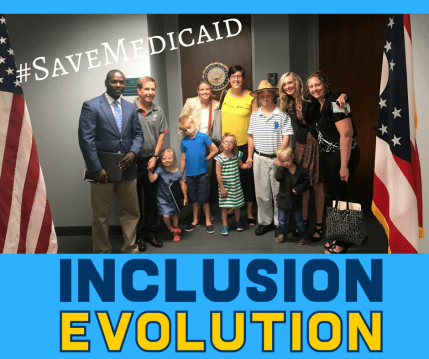
Troy and I meeting with Senator Portman’s staff
You won’t remember Hunter becoming a natural leader that often parented better than I did. Or how Troy impressed every adult with his always appropriate “please” and “thank you” and “your welcome.”
You won’t remember how much fun we had just being together.
You won’t remember, but your Dad and I will. We’ll remember and hope that you both carry these formative years with you throughout life. Don’t forget who you are and where you came from. Remember the simple things in life, fight for what’s right, and love fiercely.
We love you!
Your Mom and Dad
I’d love to hear from parents of younger and older children. If your child is younger: what will you remember about these days? If your child is older: what advice would you give parents like me just starting on this journey?
Ever had one of those moments when time stands still, and you know your life is about to change? I was 30-years-old, my stomach cut open when it happen to me. All it took was a whisper: “The boys are fine, Baby B has Down syndrome.” I stared at the ceiling, no response except sudden tears streaming down my face. I never cry. This was suppose to be the happiest day of my life.
In the NICU with Hunter (left) and Troy (right)
I was 20 weeks pregnant with twin boys when my husband, Trenton, and I’s life began to take a tailspin. We had just celebrated Trenton’s graduation from medical school and drove across country from Salt Lake to Omaha to move into a new home, so Trenton could start Family Practice residency. It was sweltering that summer, in the triple digits, and I was huge. I’d gained 48 pounds already, and my bulging tummy was starting to literally list to the left.
I got a referral to see three Maternal Fetal Specialists at the University of Nebraska, the best research hospital in the state with a level 1 NICU. I was prepared, or so I thought. The most pessimistic specialist, the one we liked the least, was the first to spy something off-putting. Dr. Jones noted that Baby B’s (Troy’s) sac had polyhydramnios or extra amniotic fluid. No wonder I was so huge! More troubling, they began to suspect that Baby B had esophageal fissula, and could not swallow. We spoke with a neonatal surgeon, who reassured us that prenatal predictions like this one rarely came true. My mom came into town and I got an MRI.
The radiologist noted nothing unusual. By week 32, my polyhydramnios had vanished. We took a collective sigh of relief. May be everything would be fine, but one of those 3D ultrasound pictures was bugging us. We laughed with friends that babies look “weird” in those pictures, and they agreed. But then Trenton mentioned Down syndrome to the doctors. Two out of the 3 specialists said the probability was very low, and nothing indicated a diagnosis. I was only 30 years-old after all (not realizing that 80% of women who have a child with Down syndrome are actually under 35). Dr. Jones, Mr. Pessimistic, said it’s a real possibility and would be the worst outcome. Looking back now, I realize so many doctors are not up-to-date on progress in the world of Down syndrome.
The day before the boys were born with Trenton and his parents, Jim and Kathy
One brisk October afternoon we went apple picking, by that night I had contractions. I wasn’t due until November 11th, but I was already 35 1/2 weeks; pretty good for twins. I tried unsuccessfully to sleep through the early contractions. I wanted to deliver naturally, and I tried for 12 hours total. Guess who greeted us at the hospital when we arrived? Mr. Pessimistic, with a chief resident who seemed eager to practice her operating skills. I pushed and pushed, got an epidural, was fully dilated, and pretended to push some more. But honestly I couldn’t feel much after the epidural. They said Baby A (Hunter) was in distress, so to the OR room we went. Soon I was cut open and before I knew it both babies were whisked away before I even got a look.
Trenton ran to the boys’ side, and I was left with an eery silence. I didn’t know what was normal when it came to childbirth, and especially C-sections. Mine was not in many ways. I didn’t find out until later that day (may be the next day?) that someone cut my bladder during the operation, which explained only a third of the eery silence. The other part was Hunter, who took longer than usual to take his first breath (may be he was trying to quiet the storm about to hit). The last part was Troy of course. Trenton says he knew as soon as he saw him. Textbook case: the eyes, the palmar crease, he just knew he said. He broke the silence with that whisper in my ear, and I could hear his heart break.
Hunter (left) Troy (right)
I wheeled into the NICU every two hours to learn to nurse my twin boys; catheter and urine bag attached to the wheel chair. Thank God for those momma hormones; they kept me sane that first week. Trenton was a wreck. He couldn’t accept what had happened. He was in a very dark place, even though we learned both boys were healthy. Troy did not have Esophageal Fissula. In fact, he had none of the common health conditions that plague a large percentage of babies with Down syndrome. Still, they made us wait in the NICU for six days for the results of the official test that would diagnose Troy. During that time we never hear a word from the chief resident, whom we suspected had cut my bladder. Dr. Jones had seen us, and he apologized for what happened.
Mr. Pessimistic had been at least partially right all along, and although I still didn’t like him, I respected his apology and professionalism. It was on one of the last days in our week long NICU stay that affirmed what a nightmare this experience had become. Trenton’s parents were making their daily visit to the NICU, I had just finished nursing and was holding one of the boys, when the director of the NICU arrived. He plopped down in MY wheelchair, popped a wheelie (seriously, people) and said: “Yep, Down Syndrome.” We all just stared in awe! Of course, we all knew Troy had Down syndrome. He was relaying the results of that official test, but the tone and manner in which he did it was jarring. Trenton asked him to leave. And then demanded that we all leave the hospital if there was no medical reason for us to be there.
The day we left that deep, dark cave they call the NICU was an exceedingly gorgeous fall day. Too bad my mood didn’t match the weather. Trenton and I swapped emotions. He jumped into action, and I started down the sad and angry road of grief. Trenton and I took longer than some families to come to terms with Troy’s diagnosis. The first months, even year was full of times of despair. I wondered if Troy would always be excluded, different. Trenton despaired that his boys would never play together. It wasn’t until Troy’s first smile, at 3 months that we took a small sigh of relief. May be we could make this work. By the second year, our despair turned to more and more moments of joy as our boys began playing together. Yes, some of our days were filled with therapy sessions and medical specialists, but their were so many more moments of simple joy.
Of course, having twins can be a blessing and a curse at times. I used to compare my boys a lot in the beginning. This was actually helpful in some ways. I was a first time mom, so I whenever Hunter reached a milestone I began working on that developmental milestone with Troy. And as the boys developed their own identities and personalities it became easier to accept them as individuals. It’s hard to believe that they’re now 4-years-old, and are more alike than different in so many ways.
They go to the same inclusive preschool class, both can write their name, read dozens of sight words, count 1-to-1 correspondence to 20, and play t-ball on the same team. Troy has an affinity for music, reading Dr. Seuss classics, and giving the world’s best hugs (as my husband defines them). Hunter is a fierce protector, and at the same time exceptionally empathetic. Most important, the boys are best friends, and lean on each other for life’s ups and downs. Although Troy continues his thrice weekly therapy sessions in speech, PT, and OT, most days he is not the center of family life. He now has a 18-month-old baby sister, Cora, who’s happy to be the center of attention :-).
Down syndrome has become kind of like the background music of our life. It doesn’t define us, but it’s always there guiding us. It forces us to see what’s truly important in life: respect, happiness, and love.
Looking back now I realize how far we’ve come. I can’t imagine life without Troy. He was worth every second of the seemingly small hardships we’ve been through. He’s made us a unique and unusually strong family unit. He’s taught us what life is all about. And although I’ve yet to have “the happiest day of my life,” I’ve had countless magical moments with my family that have added up to true joy!
This post was originally shared on www.cedarsstory.com. Visit this amazing blog for other inspiring Down syndrome birth stories.
What stands out about the birth of your child? Tell me your story below!
Research shows that full inclusion for students with the most significant intellectual disabilities is the best path forward. Federal law requires it. But reality is much different! Talk to any parent of a student with Down syndrome, and they will tell you: “the struggle is real!” In fact, statistics show only 16% of students with intellectual disability spend the majority of their time in a general education classroom with their typical peers.
Now, the University of Minnesota’s National Center on Educational Outcomes (NCEO) plans to put more of these students in general education classes with the support they need. NCEO was recently awarded $10 million dollars from the U.S. Department of Education to create the TIES Center: Increasing Time, Instructional Effectiveness, Engagement, and State Support for Inclusive Practices for Students with Significant Cognitive Disabilities.
“We’re so excited to get this center up and running. The grant begins October 1st, and we’re thrilled to have this opportunity,” says principal investigator for NCEO, Sheryl Lazarus. The center is charged with a monumental task: to support systematic changes in the way most school districts are teaching our loved ones with intellectual disabilities (ID).
“We believe in full inclusion for these students, and now we want to make that happen for them,” explains Lazarus. The goal of the TIES Center is to get students with ID fully engaged in in the same instructional activities and curriculum as their typical peers, while meeting their individual learning needs.
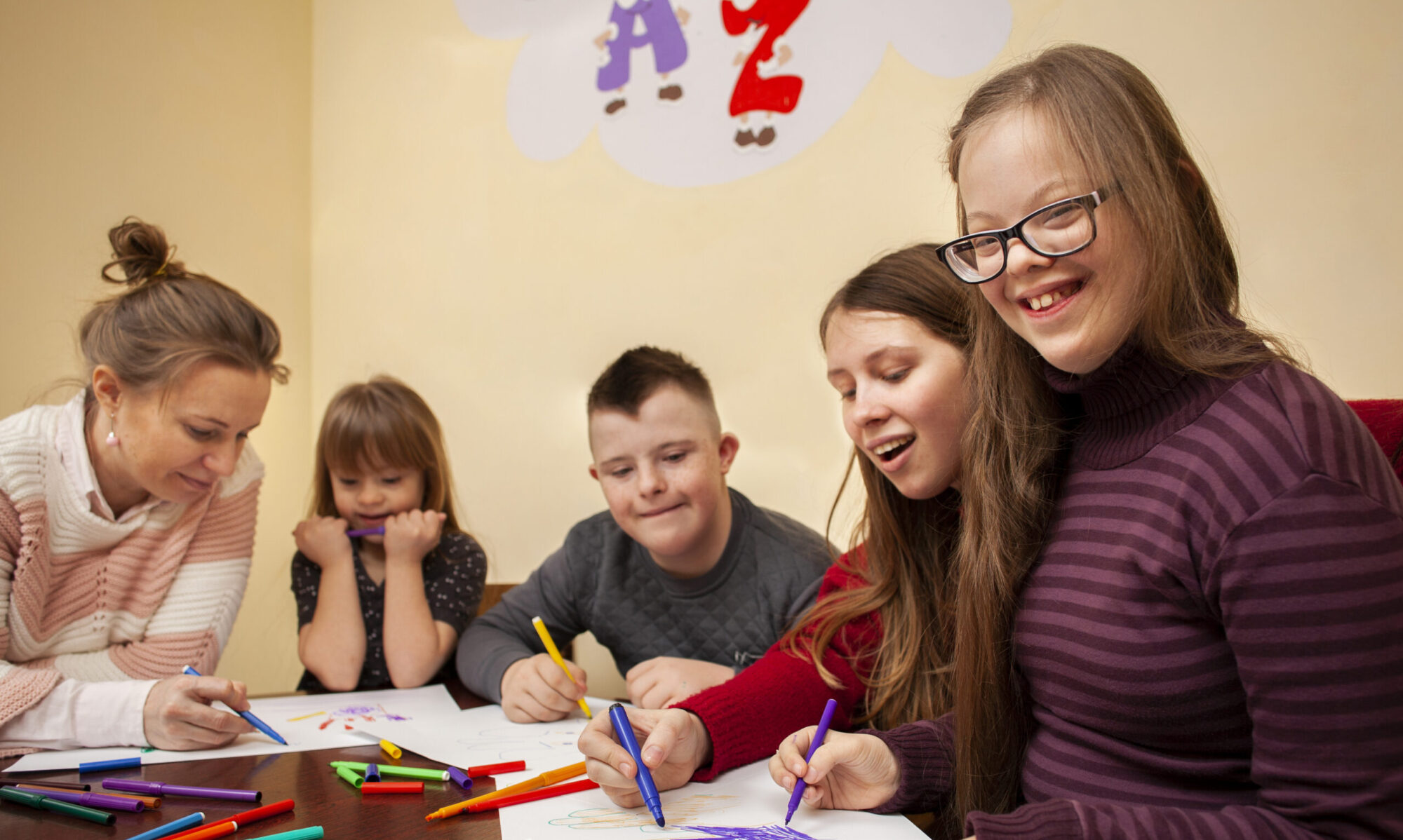
Students with Down syndrome would be a target group for this program. In fact, National Down Syndrome Congress Education Policy Advisor, Ricki Sabia, was chosen to be the parent advisor and liaison for the TIES Center.
“In spite of the strong least restrictive environment language in IDEA, the vast majority of these students are still segregated from their peers. Studies show that students in separate classes have less access to the grade level curriculum and content trained teachers. NDSC is looking forward to the impact that the TIES Center will make to improve the quality of instruction for students with significant cognitive disabilities in inclusive environments,” Ricki Sabia says.
Lazarus says the TIES Center hopes to accomplish the following goals:
Develop professional learning communities in partner state and local education agencies
Develop coaching models for implementation of resources, inclusive practices and communicative competence.
Improve the efficiency and effectiveness of existing resources.
Support parents to become partners in the practice of inclusion for students with significant cognitive disabilities.
Support systems change within the leadership of state and local education agencies for implementation of inclusive practices.
Research on better inclusion won’t be limited to the University of Minnesota. Lazarus says they will have subcontractors at the University of North Carolina Charlotte, University of North Carolina Greensboro, University of Cincinnati, CAST, University of Kentucky and the Arizona Department of Education. There will also be parent liaison’s working with the TIES Center to help parents better advocate for their child.
Lazarus says they plan to work backwards to find solutions to the barriers keeping students with ID out of general education classrooms. “We plan to work with schools to find out what’s working and what’s not to create better outcomes for these students. Hopefully that will translate into materials for teachers and parents. We don’t pretend to have all the answers, but we’re going to work hard to find the best path forward,” says Lazarus.
To learn more visit https://nceo.info. I’ll be posting more information on this grant project as new policies or practices are introduced.
What barriers do you see to full inclusion for students with Down syndrome? Comment below and share your experiences and thoughts.
Research shows that full inclusion for students with the most significant intellectual disabilities is the best path forward. Federal law requires it. But reality is much different! Talk to any parent of a student with Down syndrome, and they will tell you: “the struggle is real!” In fact, statistics show only 16% of students with intellectual disability spend the majority of their time in a general education classroom with their typical peers.
Now, the University of Minnesota’s National Center on Educational Outcomes (NCEO) plans to put more of these students in general education classes with the support they need. NCEO was recently awarded $10 million dollars from the U.S. Department of Education to create the TIES Center: Increasing Time, Instructional Effectiveness, Engagement, and State Support for Inclusive Practices for Students with Significant Cognitive Disabilities.
“We’re so excited to get this center up and running. The grant begins October 1st, and we’re thrilled to have this opportunity,” says principal investigator for NCEO, Sheryl Lazarus. The center is charged with a monumental task: to support systematic changes in the way most school districts are teaching our loved ones with intellectual disabilities (ID).
“We believe in full inclusion for these students, and now we want to make that happen for them,” explains Lazarus. The goal of the TIES Center is to get students with ID fully engaged in in the same instructional activities and curriculum as their typical peers, while meeting their individual learning needs.
Lazarus says the TIES Center hopes to accomplish the following goals:
Develop professional learning communities in partner state and local education agencies
Develop coaching models for implementation of resources, inclusive practices and communicative competence.
Improve the efficiency and effectiveness of existing resources.
Support parents to become partners in the practice of inclusion for students with significant cognitive disabilities.
Support systems change within the leadership of state and local education agencies for implementation of inclusive practices.
Research on better inclusion won’t be limited to the University of Minnesota. Lazarus says they will have subcontractors at the University of North Carolina Charlotte, University of North Carolina Greensboro, University of Cincinnati, CAST, University of Kentucky and the Arizona Department of Education. There will also be parent liaison’s working with the TIES Center to help parents better advocate for their child.
Lazarus says they plan to work backwards to find solutions to the barriers keeping students with ID out of general education classrooms. “We plan to work with schools to find out what’s working and what’s not to create better outcomes for these students. Hopefully that will translate into materials for teachers and parents. We don’t pretend to have all the answers, but we’re going to work hard to find the best path forward,” says Lazarus.
To learn more visit https://nceo.info. I’ll be posting more information on this grant project as new policies or practices are introduced.
What barriers do you see to full inclusion for students with Down syndrome? Comment below and share your experiences and thoughts.
Imagine your black child is asked to clean up trash throughout his school with all the other black students in an effort to learn life skills. White students are busy learning math, reading, writing, and socializing in the halls. They watch the black students clean up after them.
This smacks of demeaning and stigmatizing discrimination. It’s unbelievable in 2017! Except for the fact that if you replace black student with disabled student it’s a very real scenario in many schools throughout America today.
Troy loves a good dance party when we clean up at home
So, I’m about to go on a rant. Like a knock out, throw down tirade. Because this is something I feel VERY, VERY passionately about. My son with Down syndrome will NOT; I repeat, WILL NOT be cleaning his school while his typical twin brother is learning to read, write, and do math.
Having children with disabilities cleaning while their typical peers are learning is the anti-thesis of inclusion. It’s the very definition of discrimination.
This problem is very real at my 4-year-old son’s own school and too many of my friends’ children’s schools too. A dear friend of mine’s daughter with Down syndrome attends the same school as Troy. Her daughter and other students with disabilities learn to vacuum and wipe the cafeteria tables in kindergarten. KINDERGARTEN, people!!! The students that need more help and time in academics are being singled out to instead learn how to vacuum at age six.
I flinched when my friend told me this. Troy is only two years behind her daughter. Our experience in preschool at the school has been good, but I cannot envision Hunter watching his brother cleaning his table at school. Asking me after school: “Why isn’t Troy in class with me anymore? Why is he cleaning tables at lunch, instead of eating with me?” It literally rips my heart out to think about it. What will I do?
Here’s the thing: I’m all for life skills. I think EVERY student can learn a thing or two about life by cleaning their school. I am in full support of bringing home-economics and shop class back. In Japan there are no janitors, because the students clean their school EVERY DAY. This is admirable! In fact, I would be proud if any one of my children chooses a profession in the janitorial, waste management, fast food industry, etc. My mother and step-father had jobs in both. NO job is beneath ANY of my children, disability or not. Getting a job and keeping it is what makes me proud.
The fact of the matter is my son and students like him are being singled out, and pigeon-holed into a stereotypical path for employment and life. Were they even asked what interests them; what they want to be when they grow up? Their typical peers are watching this cleaning scene unfold on a daily basis and here’s where their minds begin to be molded: disability is different, disability is separate, disability is dirty, disability is shameful.
This mindset follows them throughout their educational career and into adulthood. Educators who support these programs argue they’re teaching these special students activities that “instill soft skills such as how to follow rules, adhere to a schedule, complete tasks and accept criticism.”
As students with disabilities enter high school it gets worse. Many are shuffled into a life skills path that supposedly prepares them for employment in the real world. Wanna know how that’s going? Only 24% of individuals with intellectual disabilities are competitively employed. News flash: the life skills path isn’t working!
Parents and Teachers Need to Demand Equitable Treatment of Students with Disabilities.
Christopher on his way to school
One Oklahoma mom is doing just that after her son with Down syndrome reacted with anger at being given a job of cleaning up after teachers and students at his school. Jordan Shuffield says her son, Christopher, “isn’t as verbal as some of the kids in his class but he does have feelings about it.”
Christopher lashed out in frustration on at least one occasion: “He had cleaned a table and a group of teachers sat at the table he cleaned. In his frustration he threw his bucket on the ground, and then had to mop up his mess,” Shuffield describes.
Now Shuffield has a meeting scheduled with the school this Friday to advocate for change. “We feel that having his class do this work at school isn’t inclusive,” Shuffield explains. “My son has lost skills, such as money denomination and simple addition and subtraction skills that he used to know.” The family believes if more time was spent on academics than cleaning, Christopher would be making better progress.
Federal law and a recent U.S. Supreme Court ruling demands that Christopher and other students with disabilities make “meaningful progress.” Shuffield has every right to demand a change in how her son is being educated. We’ll check back in on their story as it unfolds.
Has your child or loved one experienced this type of discrimination in school? Comment with your stories below.




 Students with Down syndrome would be a target group for this program. In fact, National Down Syndrome Congress Education Policy Advisor, Ricki Sabia, was chosen to be the parent advisor and liaison for the TIES Center.


