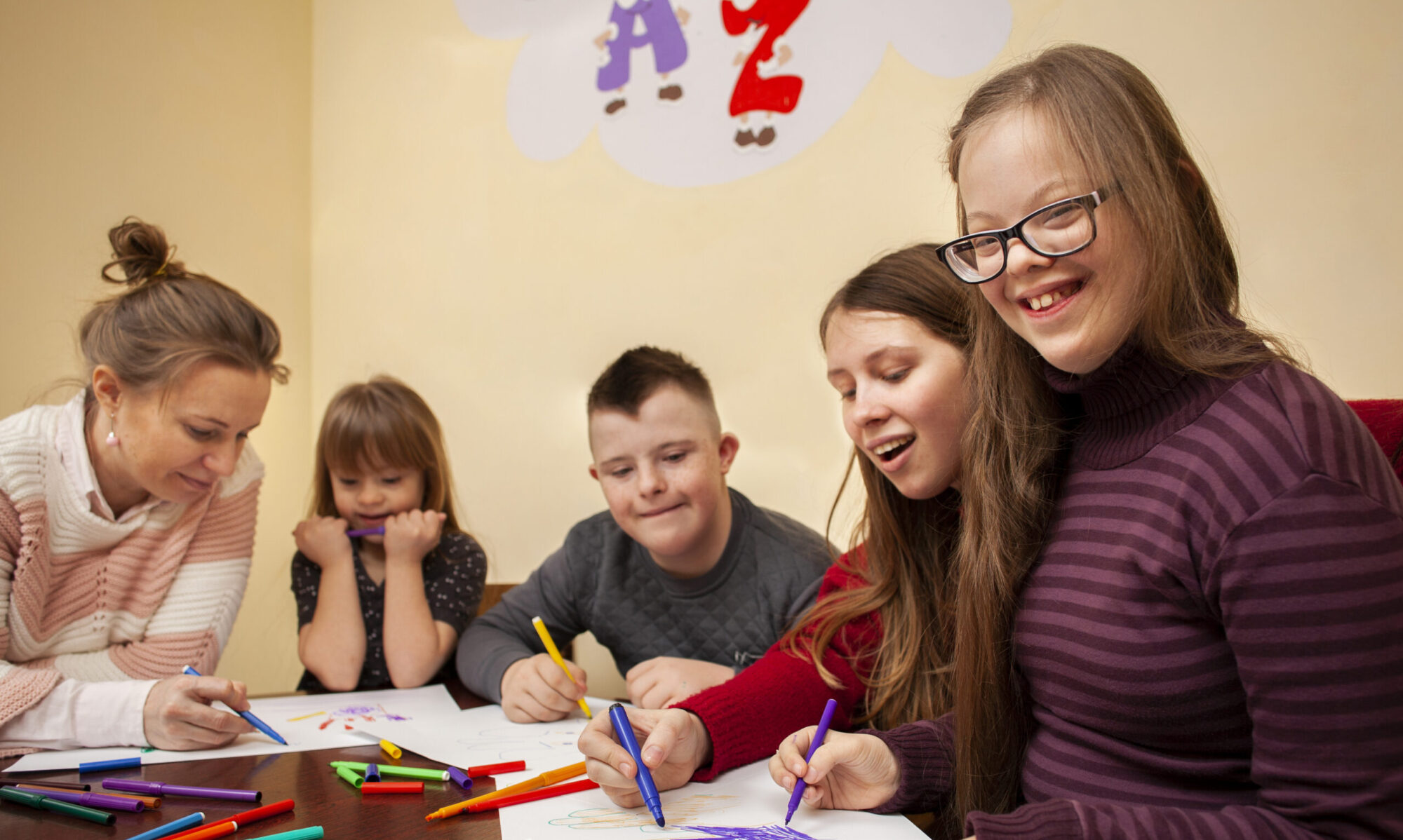

The Monday after a big birthday party is not the best day to have strangers visit my home. My house looked like Toys’R’Us exploded inside, and there was still homemade icing stuck in awkward places throughout my kitchen. Still, I made a promise, and I’m glad I did.
It was a “Day in the Life” of a family with a loved one with Down syndrome.
The Leadership Education in Neuro-developmental and related Disabilities (LEND) program asked our family to invite a clinical psychologist and disability self-advocate into our home so they could see life outside your typical treatment facility.

“I’m so excited to get to see life from you and Troy’s perspective. I think this will change how I do my job in a clinical setting,” explains clinical psychology graduate student Kaitlyn Eichinger.
Most doctors, therapists, and clinical psychologists view disability from a pathology standpoint. When your goal is to diagnosis and treat, it’s sometimes hard to see past the disability. Also, medical professionals can sometimes forget that the parent is an expert on their child’s needs, and can provide invaluable insight.
Read Related Post Here: Ending Organ Transplant Waitlist Discrimination
The LEND program recruits graduate students, post-doctoral fellows, and community leaders for a year-long interdisciplinary training program focused on improving the health of children with developmental disabilities. Spending time with families as part of the Family Mentor program is only part of the year-long LEND training.
Cincinnati Children’s LEND program is one of 52 programs nationwide, but our local program is the first in the nation to include self-advocates as trainees. Rachel Rice will meet with our family alongside Kaitlyn Eichinger, and will do all the same coursework.

“I like to prove people wrong about my disability. I was told I’d never be able to do office work, but I’ve worked in an office setting for the last five years and now work with Warren County Board of Developmental Disabilities,” says Rice. I thought Rachel brings a great perspective herself. It’s not often I get to hang out with adult self-advocates with disabilities other than Down syndrome, and Kaitlyn and I both agreed she rocked it!
Read Related Post Here: The Link Between Sleep and Learning
Troy and his siblings were excited to welcome Kaitlyn and Rachel into our home. They showed both ladies that Troy is more alike than different, and is an invaluable member of our family.
The two trainees will get a chance to meet with us two more times, in settings outside our home like a therapy session or playground. I’ll be sure to continue to share our journey with Kaitlyn and Rachel. Although they may only be getting one family’s perspective, it’s still gives them a glimpse into the personal lives of their patients.
There’s LEND Programs in all 50 states. If you’re interested in becoming a Family Mentor click here.

