One group of parents in California’s Bay area say inclusion won’t happen unless they ban together. About four years ago they started an informal advocacy group to empower parents to fight for inclusion.
Ellen with her husband and son, Jeremy
Ellen Hovey is one of the founders of the Educational Advocacy Group. Her 17-year-old son, Jeremy, has Down syndrome and is in a transitional program now.
“I had to fight for inclusion and I want other parents to understand the positive impact it has had on my son. I started this group because too many parents don’t understand their child’s rights.”
The group is truly a grassroots effort. They get word out through a private Yahoo group, social media, and their local Down syndrome association. The last Friday of every month, parents meet at Hovey’s house to discuss IDEA, IEPs, FAPE, LRE, due process. Basically, how to ensure their child receives an individualized education in the least restrictive environment.
“We don’t aggressively push inclusion on new parents, because it’s a lot of work and everyone has to decide what’s right for their child. We do council parents that schools are a business. Their job is to get as many kids that need an IEP into places as cheaply as possible; with as little effort as they have to expend. You have to understand that going in.”
May’s Educational Advocacy Meeting
The educational advocacy group has anywhere from 5 or more parents a session. Hovey says they’ve gone so far as to help parents through due process, by helping with lawyer and advocate recommendations. And it seems to be working:
“The school officials started noticing a common effort for inclusion. We go into educational conference and teachers say ‘you’re one of those Down syndrome families and you’re all trying to get included,” Hovey describes.
Hovey’s best advice is to not look for the “perfect school,” but instead learn your child’s rights and change the school you’re in.
“I shy away from recommending a particular district. For example, my school district was open to inclusion, but then we got a new superintendent and special education director and things took a turn for the worse. You have to learn how to advocate, and change the district you’re already in,” Hovey argues.
Jeremy with his inclusive theater group
Hovey reminds parents that attend that she and other leaders of the group are not certified advocates. “We’re just parents that want to help out those that come after us. We’ve been through the system, and feel like we have something to share.”
Hovey is now focusing on transitional services and employment for her son, Jeremy. She says she wishes there was a parent group for this stage of life too. “It’s always important to stick together and fight for what’s right. Our children deserve it!”
A standard high school diploma can seem out of reach for students with Down syndrome. But with inclusion and a lot of hard work, 19-year-old Faith did just that!
Faith (bottom left) performing with her typical peers
Faith became the first person with Down syndrome to graduate with a regular high school diploma in Martin County, Florida School District. Also unprecedented, she was included in general education throughout her educational career.
“I’m really happy to graduate with a standard diploma. I learned chorus, I learned drama. I like drama, I like to act. I was in Romeo and Juliet, Wizard of OZ, Beauty and the Beast. I was in Jubilate chorus too. I like all my friends,” Faith says.
Faith was on track to earn a special certificate of completion until 2014, when Florida special education law changed to allow students with disabilities to try for a standard diploma. Students with disabilities can use alternate assessments and something called “access points,” which allows them to access the general curriculum in a modified way with supports. They still must pass alternative assessments and earn enough credits to receive a standard diploma.
The school district told her mom, Paulette, that on top of being the first student with a significant disability to receive a standard diploma, Faith was the first to use the “access points” in a general education setting. “That has always seemed odd to me, that a special curriculum offering access to the general education curriculum would cause the student to be excluded from the gen ed class,” Paulette describes.
Paulette said inclusion wasn’t easy. She received a lot of push back when Faith entered kindergarten and again as she entered middle and high school. But she always set high expectations and was able to find at least one educator who supported their efforts or had an open-mind.
“At Faith’s first IEP meeting, her preschool teacher remarked that Faith had done well in the preschool, developed friendships, learned the alphabet and how to write her name. Then this wise and wonderful woman said: ‘I am not trained in special education, no one is in our private school. Faith has been successful. Certainly with all the resources of the public school system she can continue to be included with typical children,'” Paulette describes.
Faith (bottom, third from the left) performing with the Senior Jubilates
“At the beginning of 8th grade our supportive inclusion specialist called the high school to tell them to get ready, they would be including their first student with Ds. The ESE director at the high school laughed and told her they didn’t do that. The first year of high school was rocky, but then the woman retired and the new director was fully on board with making history!” Paulette remembers.
Faith’s inclusive experience allows her to be comfortable in many situations. She’s danced and acted alongside her typical peers. With appropriate supports and modifications she dissected a frog in a general education Biology class, which she described as a “yucky experience.”
“I have friends in drama club and Jubilate. I have friends from economics, history, math. I learned all things and got A’s. My mom helped me to learn in other classes,” Faith describes.
“Faith has made a difference in the lives of many typical students over the years. She has changed the attitude of people she has shared the classroom with. They know that although it is challenging, people with Ds can learn and be a valued member of a group,” Paulette says.
Faith is set to begin vocational training at a local hospital with Project Search. Her goal is to be a musical theater actress, but says she wouldn’t mind working in a movie theater for now to earn money.
Faith’s mom hopes that their story will lead other parents to fight for inclusion. “I really want parents of younger kids to follow the path we have blazed. Faith is a pioneer and I have led the wagon train. I am willing to help parents who want help with IEP meetings or just for a listening ear. I don’t want our experiences to be an anomaly. I want us to be an example of success,” Paulette explains.
As for Faith, she has her own advice for students with Down syndrome that want to follow in her footsteps: “My advice to other kids with Ds is get a standard diploma. Take drama, chorus, English, economics, history. My teachers are impressed with me and my activities. I learned about Beowulf, Hamlet, Romeo and Juliet and I did projects. Read a lot of books. That’s it.”
Faith and her family at graduation. Faith’s mom, Paulette, to the right of Faith.
Guest blogger, Geralyn Spiesz, shares her thought-provoking journey of homeschooling her son with Down syndrome:
Geralyn with her son, Lucas
In some ways I feel as if I have always been a homeschooler.
My eldest son had an insatiable desire for more information, so evenings and weekends were spent reading, trips to the library, projects, and museums. My next son followed suit and although he did well at school, I couldn’t help notice his interests were not in the books but in experiences. We spent time doing all sorts of things to augment time spent sitting and listening in a classroom.
I was sold on the fact that I could teach my son to read at 1 year, since reading is sensory and not academic. I could create an environment where every movement he made, every intention he had, would result in success. I could get him to walk and crawl miles everyday to improve brain cross-patterning and speech. I did, and by age 3 it was clear to me that whatever we were doing was working. Lucas was growing, developing, learning, and was very happy!
The idea to homeschool started to take shape and I had a huge advantage. Lucas could already read, spell and count.
Lucas turned 4 on August 30 and I had decided that we would embark on our “Kindergarten homeschool year.” I had nothing to lose. He wasn’t old enough for real kindergarten. If it went horribly I could send him to school the following year.
I poured over homeschool books, blogs, and curriculum, but I never consulted the special needs resources. I figured, all children’s needs were special and homeschool is about tailored education. I just picked and chose materials that I knew would be a good fit.
So, that first trial year, I chose mostly 1st grade curriculum for reading and math. We also did interesting things from history, science, and lots of art and music. Lucas worked on handwriting, as well as his neurodevelopment program and running daily. By the end of that year it was absolutely clear this path was necessary.
I was worried and conflicted about things like socialization. But here’s the thing, inclusion for us is the goal not the method.
Lucas’s academic ability is high, but his processing ability requires improvement to allow him to sit in a classroom and listen. His ability to maintain attention and switch attention must improve before he can sit at the lunch table and follow a conversation. If I forewent teaching Lucas as I knew he needed in a distraction-free environment, while focusing on improving neurodevelopment, he would never truly be integrated into a class.
As an OT I realized that Lucas could certainly learn routines by being in a classroom. Things like staying in line, keeping hands to himself, following the leader, etc., were certainly very important, but when the questions morph from “What color is this?” in kindergarten, to “Why do you think the artist chose that color?” In 3rd grade, the wheels would fall off the cart. Not because he couldn’t learn, but because he wasn’t neurologically ready for that level yet. It would have been like putting a 3-year-old in 3rd grade. I could not sacrifice a relatively good academic trajectory waiting for his visual and auditory attention and processing to improve.
When the year passed Lucas could handily complete all of the 1st grade work (he was not yet 5). But he still bolted away from me at the supermarket and was not able to attend in a busy environment, further solidifying my decision to homeschool. It would allow me the ability to continue teaching him academics and work on neurodevelopment.
Socialization happens in tons of places.
At parks, at the the grocery store, at home within the family unit, at parties, etc. Socialization is exposure and opportunity. Lucas takes skating lessons, and plays baseball for the town. He is at the park most days of the week and has a huge extended family.
In addition, Lucas attends a learning center for homeschool families twice a week where he takes science lab, Latin, history, and literature. I attend his groups with him as he still is unable to learn in an auditory environment, although we are making progress!
At the time I made the decision to begin homeschooling, I would have been fooling myself to think that my son was neurologically wired for a same-age peer relationship.
Lucas with his older brother, who’s also homeschooled.
Homeschooling with Lucas went so incredibly well, that I pulled my middle son (the one who couldn’t sit still…had a ton of energy…and asked a million questions) out of school and homeschooled him as well. He went from barely proficient in math on the fourth grade standardized test to the 98th %ile the following year. Turns out he was bored. I chose a very aggressive math curriculum that goes quickly, with repetition built in, and he took off. He is going into 8th grade and this will be our last year of homeschooling. He will go to the same high school as his older brother. He needed to learn the way he was wired to learn, the same is true for all children with or without an extra chromosome.
Lucas and I work very hard in school and his neurodevelopment program. He is just finishing 3rd grade. In some areas he is working at a late 4th grade level, and others at a late second grade level. If we’re honest, this this actually pretty typical of all of us. we are really good at some things and some things take more effort.
Our goal is to homeschool until 8th grade and for Lucas to sit for the entrance exam to the same private high school his brothers attend.
We would like to see him graduate with an academic diploma. We want Lucas to have neurodevelopment to understand sarcasm at the lunch table, and attend to the ping ponging conversation in a noisy cafeteria. Our goal is for him to learn by listening to a lecture instead of having everything in print for him to read. We want him to be happy and achieve all he can to do all he wishes.
The decision to homeschool a child is massive and it’s effects should not be underestimated.
I worry when it takes a long time to get a concept. But I’m getting better at realizing it isn’t Lucas’s inability to learn, it is my inability to teach it using the right method and I need to change my approach. This would not be possible in a classroom situation with multiple children. I also realize that at some point in the future we may have to make a different decision, but for now we wouldn’t change a thing.
Geralyn Spiesz is a passionate homeschooler who created the Facebook page “DSAP Homeschool,” which provides discussion and resources about homeschooling children with Down syndrome. She uses Dr. JoQueta Handy’s Brilliant Learning Program as a framework for her son, Lucas’ learning.
Many people agree, college is some of the best years of life.
It’s the first time we live independently. We make decisions that will shape our life forever. It’s a place were lasting relationships are made.
This experience is no different for Josh, a recent graduate of Syracuse University.
He cheers for the Giant Orange in the Otto’s Army section of the SU football stadium. He hangs out with his friends at the UU and interned at SubCat, a professional recording studio off campus.
“SubCat was my favorite internship. I could find out information about getting a job and how to work with the people involved in the job, like the boss or co-workers,” Josh says.
All of these experiences are extraordinary compared to your typical college student, because Josh has Down syndrome.
I got the privilege to hear InclusiveU executive director, Beth Myers, speak at the first annual NDSS #DSWorks conference in Washington, D.C. I learned how the program fully integrates students with intellectual disabilities into the fabric of campus life.
InclusiveU is one of only a few college programs that practices full equitable inclusion.
This means students with intellectual disabilities declare a major, enroll as an audit student for certificate (which is open to all students), take the same classes as their typical peers, and live with them in the dormitory.
Josh recall’s his favorite professor: “My favorite memory was working on the lights with David Bowman, one of my teachers. He was a really fun guy to be with. Doing the lights for the stage is one of my goals for the future and part of my major.”
A peer-to-peer program helps to facilitate this inclusion.
Josh says, “I got to go to classes, I would study with my peer partners, Cindy and Lindsay. My favorite classes were the classes at Syracuse Stage and stage techniques, were really fun. I graduated with a certificate in Visual and Performing Arts.”
Modifications and adapted coursework allows students to experience a wide-range of courses on campus.
Students have full access to the course catalog, but they can’t take Writing 400 unless they’ve passed the prerequisite courses.
InclusiveU uses Project Search to help students with independence skills. “I love it. The reason why I loved Project SEARCH was because I could explore all the job opportunities I liked,” Josh explains.
The 42 students currently in the program are expected to complete three employment internships on or off campus. They also take seminars in communication skills, professional dress, employment, and self-advocacy.
Entry into the program includes a written application and in-person interview. The student doesn’t need a high school diploma, and the program doesn’t look at GPA or SAT scores. InclusiveU accepts students who are non-verbal, non-readers, and who have low mobility.
During the #DSWorks seminar I learned that the biggest barrier to more higher education opportunities like InclusiveU is money (isn’t it always?).
Tuition for InclusiveU can run upwards of $23,000 a year. Medicaid waivers, pell grants, scholarships, and federal financial aid are now available to students with an intellectual disability. Still, the cost can be prohibitive. And starting a program like this takes a lot of advocacy and a lot more money.
For Josh, the experience was priceless!
He learned to live independently and hopes to use the skills he learned in his eventual career: “I want to work at pop concerts (Lady Gaga, Ke$ha) working on live audio, lights and special effects. I would like to also work on a TV show specifically a reunion show (Brady Brunch, Full House) being an assistant.”
“I will miss the people at Syracuse University and InclusiveU when I move to Florida.”
Congratulations Josh! You’re an inspiration. Inclusion Evolution and the Down syndrome community wishes you the best of luck!
Do you know someone with Down syndrome that is attending college? Tell me about your experience below or private message me.
The old adage “don’t judge a book by its cover” never resonates with me more than after I had Troy, my son with Down syndrome.
I’ll be honest, I’m a conformist. A follower even. I’ve blended my whole life. I was never the richest kid, or the smartest kid, or the prettiest either.
But what happens when you can’t blend, because you were born to stand out?
My Troy stands out. His visible disability brings instant judgement wherever we go:
From fellow moms: “Can he climb those playground stairs?”
From other kids: “Troy, let me help you with that.”
From his teachers: “I am shocked that he’s potty trained and knows all his letter sounds! But we’re still not sure he can keep up in higher grades. May be you should consider a resource room.”
Even from sweet grandmothers: “Oh, those children are always so happy. Your son is an angel sent from heaven!”
These comments are all well-meaning, which is what makes them sometimes hurt the most.
In my experience, I can more easily ignore and shut out the uneducated jerk who treats Troy like the plague.
It’s the good intentioned comments that I receive on a daily basis that weighs me down. I at once want to hug them for their desire to “want what’s best for Troy,” and punch them for instantly and subconsciously assuming “he can’t.”
Their comments often catch me off guard, because 99.9% of the time ALL I SEE IS TROY—NOT Down syndrome.
It’s a constant internal struggle.
That’s why I simply adore a recent pick by my beloved book club called “Wonder” by Raquel J. Palacio.
It’s a pre-teen book (one of my personal fav book genres) about a boy named August (“Auggie”), who has a severe facial deformity. At 10-years-old he leaves the decade-long safety of his homeschooling career to enter a private middle school.
You can imagine the drama that ensues.
This thought-provoking, witty, and eloquently written book will have you reeling, especially if you’re directly connected to someone with a visible disability or just different.
Auggie is introspective, vulnerable, and hilarious.
The book starts out with Auggie declaring “I won’t describe what I look like. Whatever you’re thinking, it’s probably worse.”
He’s not a novel device or token disabled kid. Neither are the other characters, which I found especially fascinating.
There’s characters in the novel that never come to accept Auggie, or see him as anything other than “other.” But there’s also truly inspiring friends, who are amazing because they learn to see Auggie for who he truly is: a smart, funny kid.
I cried while reading the perspective of Auggie’s parents. They at once want to shield their child from this brutal world, but also push him to reach his highest potential. Any parent can find commonality in their story.
And the perspective of Auggie’s sister, Olivia (“Via”) particularly stuck with me.
I worry about the impact of Troy’s disability on my typical children, as much as I worry about Troy.
Will they resent Troy, or my husband and I for the extra care that Troy sometimes needs? Will they be bullied, because their brother is different? Will this visible disability ruin their life?
Via taught me to take a deep breath, and embrace the mess that is life.
Yes, she does some time resent her situation (don’t we all at one time or another), but she’s the only character who somehow inherently embraces her brother and pushes him to live life like no one else.
Get this book! Have kids you know read it. You won’t be disappointed!
The movie version, starring Julia Roberts, Jacob Tremblay, and Owen Wilson, was supposed to come out this past February. It has been postponed to fall of 2017.
I “wonder” if viewers will be able to embrace this movie, understand it’s impact, and not judge a book by its cover.
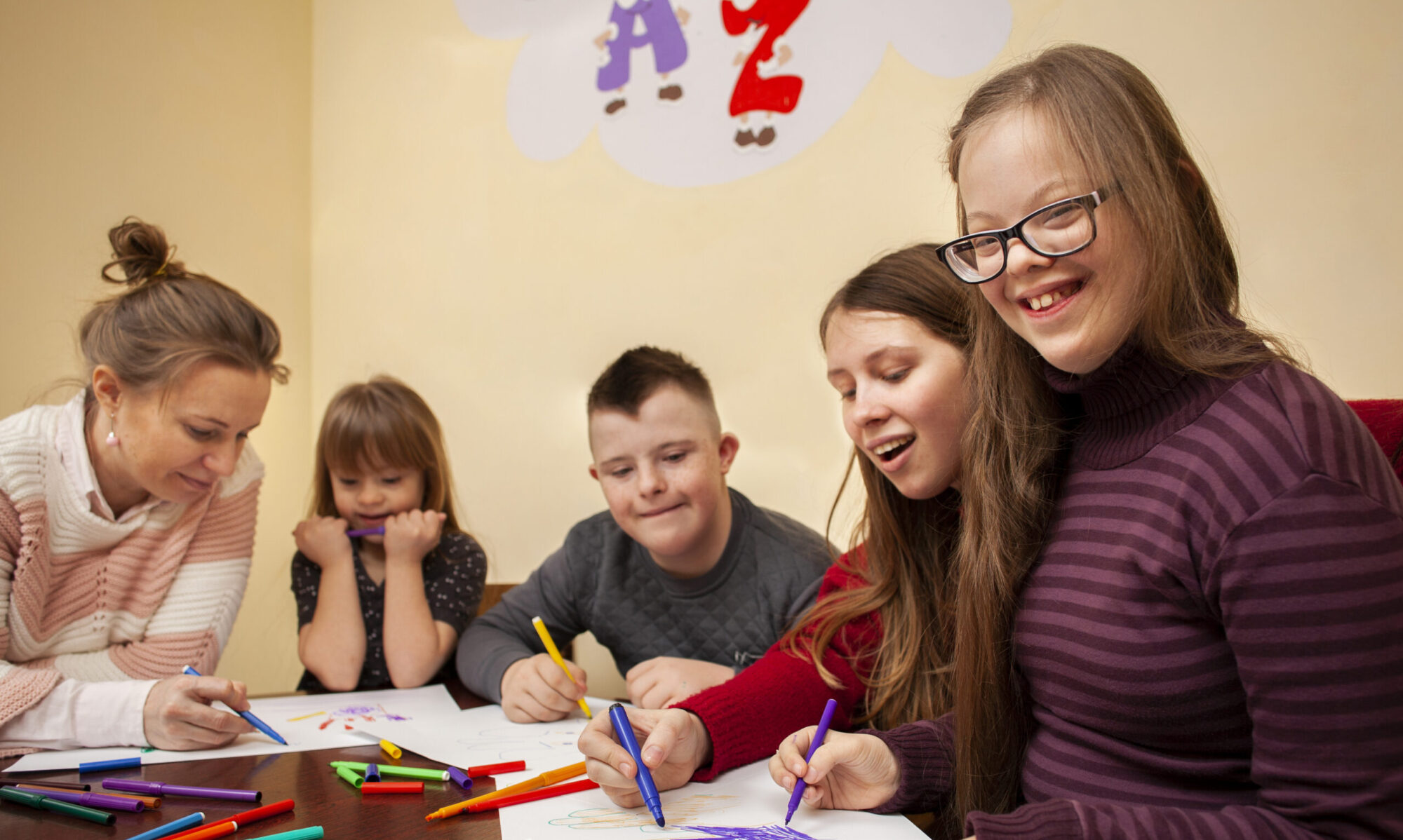


 The group is truly a grassroots effort. They get word out through a private Yahoo group, social media, and their local Down syndrome association. The last Friday of every month, parents meet at Hovey’s house to discuss IDEA, IEPs, FAPE, LRE, due process. Basically, how to ensure their child receives an individualized education in the least restrictive environment.


 Josh recall’s his favorite professor: “My favorite memory was working on the lights with David Bowman, one of my teachers. He was a really fun guy to be with. Doing the lights for the stage is one of my goals for the future and part of my major.”
 Students have full access to the course catalog, but they can’t take Writing 400 unless they’ve passed the prerequisite courses.


 And the perspective of Auggie’s sister, Olivia (“Via”) particularly stuck with me.