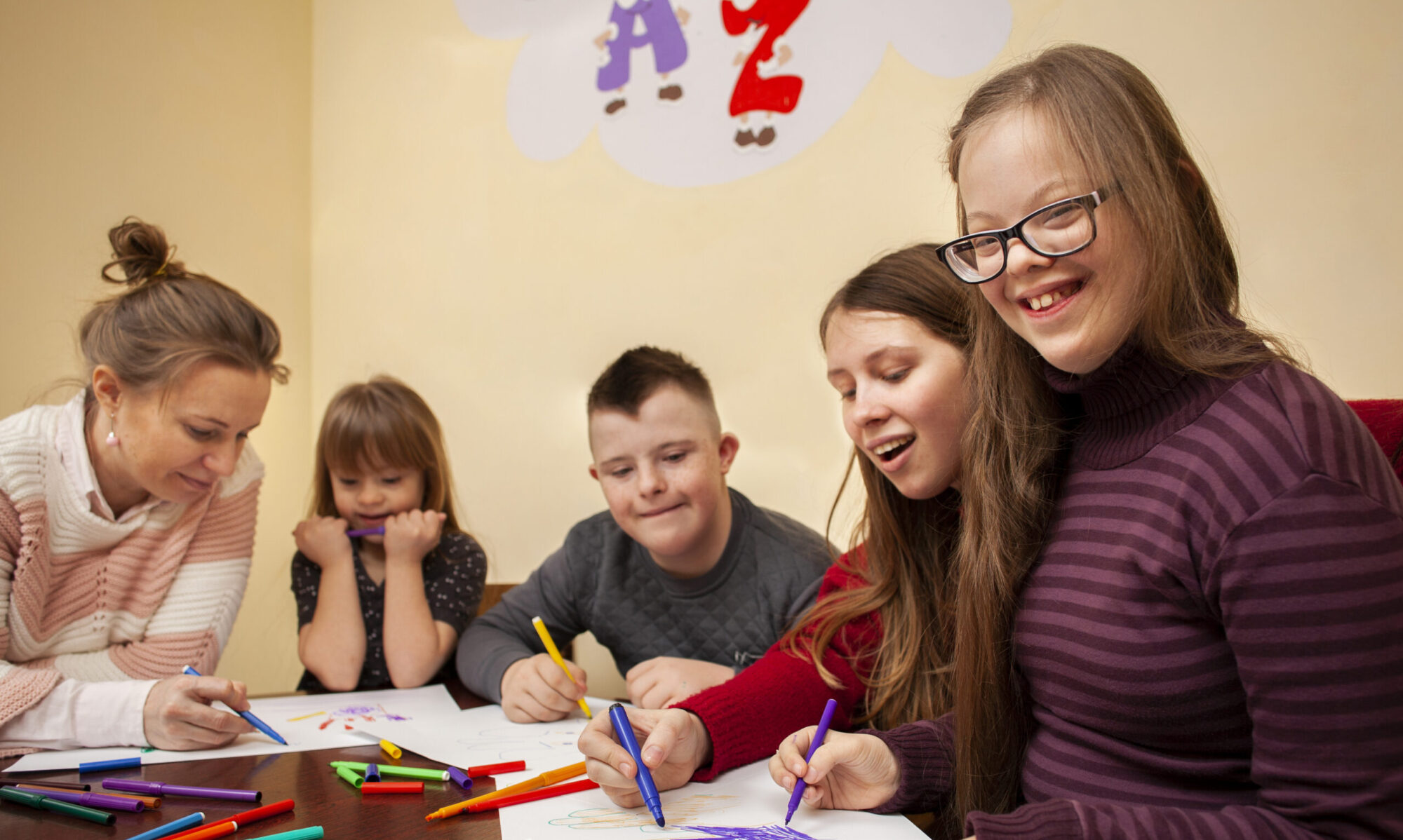
Everything I Need to Know About Inclusion I Learned in Preschool

The sign over my twin sons’ preschool states: “Where Wonder Begins.” I was filled with euphoria reading those words three years ago, when the boys were starting preschool just shy of 3-years-old. I believed I had hit the jackpot. An inclusive public preschool for my son with Down syndrome right out the gate. A place where he would not only belong, but would thrive in “wonder.”

My husband always giggles when we walk past the sign for an IEP meeting. He jokes that no sign could ever match my idealism and pragmatism of inclusion for my son with Down syndrome. He’s right, of course.

Read Related Post: Building the Perfect IEP

Don’t get me wrong, my sons’ preschool experience was great. Attending their third and last preschool performance and last day festivities, I couldn’t help but sit in wonder at how much they’ve grown. Both are equally ready for kindergarten.

But these past three years were a huge learning curve, mostly for myself. I went into my sons’ preschool experience with one notion of inclusion and advocacy, and left with a completely different one. I assumed if you found the right school or great teacher, that everything else would fall into place. Inclusion done right, is a lot more than that. Most school’s have a system in place for special education, and they’re not eager to provide a different path unless you politely push. If you don’t speak up and ask questions, your child might not get what they need for their “individualized” education plan. You have to keep the lines of communication open with the IEP team, learn to collaborate and compromise, and stand firm on specific ideals that you hold dear.

Preschool is a time of exploration for children. I used the time for the same purpose when it came advocacy. Here’s what I learned:

1. Every school, teacher, and parent’s definition of inclusion is different: When looking for an inclusive school, don’t believe just one source. I made that mistake when we move to the area. A few parents with children with Down syndrome said this district was the most inclusive. I soon learned that, although the preschool is half typical kids and half kids on IEPs, K-12 is much different. Most students with significant disabilities spend the majority of their day in a self-contained class, starting in kindergarten.

Talk to other parents, but also look up the school’s mission statement, call the district special education director and ask about the district’s policy on inclusion, tour the school and ask about the continuum of placement. You could even look at Due Process results for the district to see if they are violating Least Restrictive Environment regulations. I did all of this for our new school, in a new state.

Read Related Post: A Letter to My Son’s New School

2. Use this time of exploration as on-the-job training: Even though I was an educator and sat in on many IEP meetings, I had never sat on the other side of the table as a parent. I soon realized that I had a lot to learn about the IEP process. At first, I focused solely on building strong IEP goals for my son, thinking that was the ticket to academic and social success. I soon realized that IEP goals only scratched the surface of access to a truly inclusive experience. Present levels of performance, parental concerns, specially designed instruction, accommodations, progress monitoring…I essentially ignored all of these things the first year of preschool, but soon realized that the only way my son was going to meet his IEP goals was to ensure those other parts of the IEP were clear and strong.

I ended up taking a year-long special education advocacy course from the Council of Parent Attorneys and Advocates (COPAA), to learn the ins and outs of the IEP process. I don’t regret it! I would encourage you to take workshops and read books on inclusion, as well as the IEP process. Knowledge is power! What you’ll find out is parents have A LOT of power when it comes to the IEP process. Use it to your child’s advantage.

3. Failure is not fatal in preschool: Research shows preschool leads to better academic and social gains in kindergarten and beyond, in part because children have a chance to practice in the process of school. The pressure is off in preschool. This is true for advocacy too. Allow yourself to dive deep into the IEP and special education process. Learn all there is to know before your child starts kindergarten, and don’t be afraid to make mistakes.

The beauty of preschool is that you still have time to develop educational expectations for your child and their school. There’s no deadlines, tests, or real pressures to contend with. Enjoy the time with your child, while doing your research. You’ll go into kindergarten having practiced the process, and ready to advocate for what your child needs.

I’m glad I took these three years to play with the idea of inclusion and what I want for the next 13. What is preschool like for your child with a disability? Comment below with your story or tips for other parents.

A Summer of Inclusion at Camp PALS

It’s an American coming-of-age tradition: summer sleep-away camp with friends. 20-year-0ld Pete Roll got his chance to soak in all that’s great about summer at Camp PALS.

“It is VERY fun! I got to stay in the OSU dorms like Em and Dan (his sister and brother),” Pete Roll explains. He’s attended the camp every summer for the past three years.

Camp PALS is a week-long overnight camp hosted at 11 universities across the country for young adults with Down syndrome (age 12-30) and their typical peers. PALS mission is to create an inclusive experience where these young adults grow in independence, and build transformative friendships.

Pete attended camp PALS on the Ohio State University campus. As seen in the video above, he enjoyed bike tours, karaoke, and showing off his dance moves.

Pete Roll won the “biggest smile award” at Camp PALS; Ricky Price far right

The Columbus, Ohio Camp PALS Logistical Director, Ricky Price, says camp PALS is more than just a fun time: “Without directly working on appropriate social skills, we are teaching them through inclusion. When Pete arrived at camp 3 years ago he was a shy kid who knew very few people. This year he won the ‘biggest smile award,’ is eager to know everyone, and helped comfort a first-time camper who was upset.”

This is the first time away from home for many of the campers. Price says they help new campers feel welcome with a heart-warming arrival ceremony, which includes 20 new friends welcoming the campers with signs of encouragement, hugs, and music. “It’s an overwhelming experience of acceptance,” Price describes.

The week long activities are different depending on your location. In Columbus this summer, campers enjoyed a Disney movie theme.

“We rented out an entire movie theater and watched Moana. Pete had the biggest smile on his face the entire time the movie played. He rocked at singing Moana’s theme song “How Far I’ll Go” at karaoke night. It takes a lot of courage to get up and sing in front of people. Pete has definitely come far!” Price says.

“My favorite part is hanging out with the COOL counselors like Ricky,” Pete explains. Campers with Down syndrome are matched up with a same-age typical peer who shares the same interests or hobbies.

Part of the week’s activities includes PALS Congratulations project. Campers write letters of Congratulations to expecting or new parents of children with Down syndrome. The letters offer new parents an intimate and thought-provoking look at the beautiful lives of young adults with Down syndrome.

Young adults with Down syndrome are teamed up with a typical peer

The camp experience is invaluable for everyone involved.

“I’ve worked for the PALS program for 8 years. I had a brother with a disability and that’s how I got involved. I started in high school and I wasn’t the most social and outgoing person. Camp PALS was the first time I made a true connection to my own peers. I still stay in touch with my first campers (typical and those with a disability),” Price describes.

He says the message of inclusion and acceptance is seen by the community at-large too. “People will stop us on the street and ask us who we are and what are we doing. We’re showing them that it’s normal to include people with intellectual disabilities in everyday life,” Price explains.

The end of the week includes an inclusive closing ceremony, where campers, friends, family and community members are invited to learn and talk about campers’ experiences. Price says some of the most moving speeches are from parents who share their gratitude and trust at allowing their child to be away from home for the first time. “There’s not a dry eye in the building,” Price says.

“I think Pete loves that he can feel like everyone else! All the campers have the same diagnosis, so he isn’t different. He also loves that he’s away from home on a college campus in an actual dorm. It’s an amazing experience!” says Pete’s mom, Chris Roll.

To find out more about information and where you can attend Camp PALS visit their website here.

PALS opens their program to any individual with Down syndrome ages 12-30, and their typical peers ages 16-30. The only requirements are an openness to the camp experience, an ability to attend to their private hygiene, and endurance to attend to a week of scheduled activities.

Tuition for the camp is $1400, and covers food, housing, supplies and activities for the camper and typical peer volunteer. Reduced tuition and financial aid is available for those that cannot afford the cost of the camp. The PALS Program covered 100% of the financial aid requests made last year.

Price says bringing camp to your local university is as easy as having a sizable population of individuals with Down syndrome and community interest. The PALS program asks for a donation from local organizations to start the program. This shows a commitment and desire to bring the program to your area. Once the there’s an interest, PALS creates a relationship with the local university and recruits high schoolers and college-aged volunteers.

Mother’s Day Advice From Moms Who’ve Been There

This mother’s day I hope that you take some time for yourself, and realize that you’re doing the best you can for your child. Drink the wine, eat the chocolate. Kick back, and know you and your child will be ok. For proof of this, I asked some mothers, who are further along on their parenting journey, to give some sage advice to newer moms. I asked all of these rockstar advocate moms the following questions:

  1. What advocacy advice do you have for moms just starting this journey?
  2. What advice do you have for new moms to prevent burnout? 

I got so much good advice from moms, that I made this a 2-part series. Click HERE for the first part!

If you haven’t listened in on Charmaine Thaner’s Facebook Live posts, you’re missing out. Every week, Charmaine hosts an advocacy guru or gives timely advice on IEPs. Check it out here. Her son, 29-year-old Dylan, rents his own house with a roommate, attended the University of Colorado Springs, currently works at Red Robin restaurant. Charmaine credits all of this to full inclusion in K-12.

Charmaine’s advocacy tip for new moms is to focus on your child’s strengths. “At the beginning of an IEP meeting ask each person sitting around the table to share a couple strengths your child has. It creates a positive tone and helps everyone see your child as a person with gifts to share,” Charmaine says.

To prevent advocacy burnout she recommends to build relationships. “The 3 Rs of Advocacy are Relationships, Relationships, Relationships. Get to know the staff as people, what they’re interested in, about their family, what you have in common with them. Help teachers build positive relationships with your child. When a teacher knows your child on a personal level they will go the extra mile for him/her.”

Stephanie Smith Lee and her late daughter, Laura, are the pioneer advocates for inclusive higher education. When Laura asked her mom back in 2000, why she couldn’t go to college like all her friends, Stephanie said “Why not!” That started an amazing journey that has help lead to more than 260 inclusive college programs for people with disabilities. Laura went on to graduate from George Mason University’s LIFE program, work at the World Bank, volunteering at a food bank, and becoming a nationally recognized self-advocate giving speeches nationwide with her mother by her side.

Stephanie’s advice to new moms: “Understand that you really can make a difference, and that there are many of us who have been working on advocacy for decades years who will help and support you.”

Stephanie says to “do the best you can with the time and resources you have available. Don’t feel guilty when you need to take time for yourself, your family, and your work. Come back at it refreshed and ready to make a difference!”

Laura and Stephanie doing what they do best: Advocating!

Senior Education Policy Advisor for the National Down Syndrome Congress, Ricki Sabia, has also been at the forefront of political advocacy and disability rights. She was instrumental in securing educational rights for students with disabilities in the new Every Student Succeeds Act (ESSA). Her son, 25-year-old Steve Sabia, lives independently with a roommate, attended Montgomery College, and works at Holy Cross Hospital.

Ricki’s top advocacy tip for new moms: “The ability to collaborate and see issues from other perspectives is as important as knowing your rights under the law.”

Ricki reminds parents to “pick their battles, join forces with others, pay attention to your health and well-being, and don’t forget to take time to simply enjoy your child.”

Ricki and Steve

Amy Allison may not have a child with a disability by birth, but she has served hundreds through advocacy. As the Chief Operating Officer of the Down Syndrome Guild of Greater Kansas City, Amy has visited over 800 families receiving a diagnosis for Down syndrome, and currently serves 1500 people with Down syndrome. Attending the KCDSG’s annual, winter conference is a must. I learned how to potty train my own kiddo with Down syndrome, and will never forget the fabulous siblings workshop. Click here for more on that.

Amy says parents should “trust their gut and instincts. If something feels off about one of your children follow that voice in your head and keep pushing for answers regardless of what the “experts” may say to you. Allow your child space and grace to try, fail and make mistakes even though you can see the pain and heartache coming. If you overprotect your child and shelter them from the consequences of their actions, you set them up to fail as adults.”

As for preventing advocacy burnout, Amy says “be sure to surround yourself with a good group of friends and family members who will go to the mat for you or your kids. And DO NOT be afraid to ask for help or admit you are tired. Advocacy is a marathon not a sprint. Pacing yourself and choosing your battles will take you help you cross the finish line!”

Amy with her 3 kids

I met Carolyn and her son, Walter May, of Ohio from a Self-Advocacy Communications Workshop I co-taught for adults with Down syndrome in our area. Carolyn says things have changed drastically since her son was born 45 years ago. Walter told me how he was bullied and taunted in school. Still, this mother-son duo thrived despite the prejudices they faced. He’s an extremely well-spoke self-advocate who works locally for the famous “Homies with Extra Chromies” t-shirt company, as well as a local tennis club. He spouts off sports trivia like no one’s business, and loves to joke around.

Carolyn and Walter

Carolyn’s advice is simple, yet true: “Never give up!” and “Always take time for yourself.” Thanks Carolyn and Walter for showing me what I have to look forward to. I’ll miss you guys!

Happy Mother’s Day to all you brave, wonderful mothers! Celebrate you today! 


4 Tips to Prepare for Your Child’s Next IEP meeting

If you managed to survive your child’s Individualized Education Plan (IEP) meeting unscathed you deserve a MAJOR AWARD. Even if you walked out of that room full of teachers, therapists, and school administrators wanting to hurl, there’s hope.

IEPs are fluid. This is not an end game. Your Child’s IEP “is not a form” according to Supreme Court Justice Chief John Roberts.

Other than your child, you are the most important person on your child’s IEP team. That’s because you know your child best. Likely, you’ve become an expert on your child’s strengths and weaknesses.

If you’re reading this, I know you’ve spent countless hours scouring the Internet for expert advice on inclusion and educational best practices.

Still, an IEP meeting can often feel like an episode of David and Goliath. You playing the part of David.

So, now is the time to get organized. Rally the troops, because this year’s IEP meeting is going to be EPIC!

Here’s 4 steps to make your child’s IEP meeting run as smoothly as possible: 

  1. Never go alone to an IEP meeting!
    • An IEP team meeting can include countless school personnel, often with their own agenda.
    • If you can afford it, find an non-attorney special education advocate in your area by searching the Council of Attorney and Advocates directory here. A good advocate can cost you anywhere from $200-$1000, but it may be worth your weight in gold to have someone in your corner who knows the law.
    • If you can’t afford an advocate, invite an friend, pastor, neighbor….anyone who is less emotionally invested than you are and who can take good notes.

2. Organize all those documents CHRONOLOGICALLY!

  • As a former teacher, I realize failure to document can come back to bite you in the “you know what.” Keep all of your child’s records – from evaluations to letters home to IEPs to that adorable little Mother’s Day painting he made you this year. But how?
  • First, go out and buy the BIGGEST 3-ring binder you can find.
  • Display the most INNOCENT picture you can find of your little rugrat on the front, and have a bio of how amazing he is on the inside cover. Click here to learn how to make a bio like my son’s. Bring this with you to EVERY IEP meeting (make sure you hold the folder picture-side out–for all to see)
  • MOST IMPORTANT: Organize your documents chronologically! I’ve tried creating categories for my son’s IEP folder, but I soon realized the categories are ENDLESS (IEP, ETR, Behavior, Communications, Resources, etc). Also, some of the documents could really be under more than one category (which category do you choose then?).
  • My best advice, create a table of contents with the following: date, author, type, significance. Number each document and place them in order of date. Then you can quickly look back at your table of contents to find your child’s “1st grade ETR”. 3. Save all communications!

    • Communication is EVERYTHING! Save it all: emails, letters home (see step 1), even text messages.
    • At the end of each email I send to school personnel I always write: “please add this to Troy’s educational record.” Emails can often get lost in the ether, but they can be very powerful if you need to make a case for a change in your child’s IEP later. Make sure you make them a part of your child’s official record.
    • The easiest way to save emails if you don’t have a physical copy and don’t want to print it out, is through email files. Most emails (I use Gmail) allow you to create folders.
    • I have a folder for Troy in my email, and even have sub-folders (for behavior, IEP, and therapies).
    • Any time I get an email I save it in the appropriate folder. I even email text messages to my email to save.
    • This is especially important if, for instance, you keep getting an email about your child’s behavior. Keeping a paper trail (or in this case, an email trail) will be crucial for getting your child the help they need. Most schools require evidence of a continued problem before they’ll shell out money for say a formal behavior assessment.

      4. Save all resources in LiveBinders!

      • I learned about LiveBinders from a dear friend who is a professor of bicultural-bilingual studies (so you can use this for non-IEP topics too). If you love reading up on expert advice about Down syndrome, inclusion, special needs law, anything really…then you will be SIMPLY AMAZED by LiveBinder!
      • It’s an online, find-it-whenever-and-wherever-you-need-it organizational masterpiece. My “binders” include: inclusion and law resources, letters to school, modifications to curriculum, literacy, APPs, Introducing Troy to classmates
      • Whenever I find something spectacular on the Internet, I copy the URL and paste it into the appropriate “binder.” Then whenever I have an issue with a particular topic, I can go back to my binder and find resources.
      • You can have up to 6 FREE binders before LiveBinder starts charging you. Check it out!

Let me know what you think of these 4 tips below. And tell us how you make your child’s IEP meeting run like a well-oiled machine! Comment below.

Extended School Year: A Necessary Part of Inclusion?

My son has a late October birthday, so he’ll spend three years total in preschool. In addition, he’s receiving Extended School Year services this summer. 

It wasn’t easy trying to convince the school that my son needed extra help in the summer. Even though Extended School Year (ESY) is a protection under the Individuals with Disabilities Education Act (IDEA), many school districts push back when parents request it. ESY is a service designed to help students with disabilities maintain all the skills they learned during the school year. The service should be in the child’s Least Restrictive Environment (LRE) and individualized to their needs. These last two aspects of ESY is where many schools seems to stray from the law. Many ESY services can be far from home, not with typical peers, or not individualized. Depending on where you live you may have heard a variation of our school’s argument against ESY:

“ESY is for students who’ve fallen behind. Troy doesn’t need ESY.”

My son at school this summer

This was the argument my son’s teacher made the first time I brought up ESY. Being a new mom, and not yet knowledgeable about the law, I acquiesced.

But the summer after Troy’s first year in preschool, I attended a Wright’s Law Seminar. The seminar highlighted special education law and IDEA. ESY came up and it piqued my interest. Peter Wright mentioned that a student doesn’t have to fall behind to get summer support. I also received several special education law books, that confirmed what Wright said.

Year 2 of preschool, I was ready to argue for ESY!

In January, I asked the teacher again about Extended School Year for Troy. She used the same argument as the previous year. Understandably, ESY costs school districts money and time; something that most don’t have. Although I love his teacher and the services my son had received so far, I wasn’t about to back down.

My son practicing calendar time during ESY

I made sure I got everything in writing, and I mentioned that by law Troy could receive ESY for “emerging skills” that he had not mastered on his Individualized Education Plan (IEP). I asked that the school begin collecting data to see if Troy in fact needed ESY. The teacher forwarded my email on to the principal. During our IEP meeting I received push back, but they admitted he had not mastered his IEP goals and ESY may be an option.

Secretly, I did a happy dance! It’s not that I’m super excited about Troy spending time at school this summer, but I wanted to set a precedent. 

On his way to summer class

We’re military and move a lot. I wanted to make sure ESY was in his IEP from the very start of his educational career. This might make it easier to get summer services at the next school Troy attends.

Plus, even though Troy is just in preschool, he still needs extra help. I liked the idea of Troy practicing routines, classroom behavior, and working on skills like conversational speech and math in the summer. Extra help in the summer makes inclusion more seamless during the school year.

Then my local Down syndrome mom friends started asking me how I got ESY for Troy. I explained my approach and pretty soon they started asking for ESY services for their child.

We started a local Down syndrome ESY Revolution! 

The teachers and administrators realized we were working together. Pretty soon all three students with Down syndrome were grouped together into a cute threesome in my son’s teacher’s class. They’re all working on different skills, but Troy’s teacher can use the group setting to make the summer class more like a real class. It’s worked so far!

Does your child get Extended School Year services? Do you think it’s sufficient and makes a difference in your child’s progress? Let me know about your experience below!