A Day In the Life of My Son with Down Syndrome

I run a tight ship in this household of five. When we’re not traveling, our days are pretty consistent. I’m known as the “Routine Queen,” and Troy thrives on it.

So, what’s a typical day like for my 5-year-old with Down syndrome? Much like any other 5-year-old boys’. Check it out below:

Our day begins around 6:30 a.m. This is actually sleeping in for Troy and his typical twin brother, Hunter. The elimination of naps at the beginning of the school year ended our pre-5:00 a.m. wake-up calls.

Troy is a creature of habit, just like his mother. Every morning, without fail, he comes to me and says “Os and milk and a spoon too, please.” Because he has Childhood Apraxia of Speech novel phrases are often hard for Troy to speak intelligibly. Routine phrases, on the other hand, are as clear as day. “Os and milk and a spoon too, please” is one example of a VERY CLEAR phrase that Troy has mastered.

After breakfast we read for a bit, before getting dressed. Troy is working on mastering a few of Down Syndrome Education International’s books, as well as his favorite Orange County Learning Program books. This kid has always been a bookworm!

Reading his favorite Sue Buckley Book

Related: Teaching Your Child with Down Syndrome to Read

By 9 a.m. we’re at private therapy for Physical and Occupational Therapy. All three of my kids think Troy’s weekly trip to ABC Therapy means playtime for everyone.

Troy’s twin brother and little sister play while Troy “works”

Troy is learning how to cut with scissors, write his name, jump with two feet together off a too-high bench, swing, and bicycle. This is all fun-and-games compared to learning to crawl and walk and dress himself. He used to cry during therapy. These days it’s cake.

Troy with his OT and PT

Troy throwing an epic tantrum, because he wants to sit in the front “this time!”

The kids get in a quick lunch before the school bus arrives at 11:45 a.m. I wish I would have gotten pictures of Troy getting on the bus, because he absolutely LOVES IT!

Luckily, his preschool teacher uses a cool app called Class Dojo. It’s like Facebook for school. One of the teacher assistants takes a ton of pictures and uploads them with a few captions detailing what they did during the school day.

Troy with his preschool teacher

Related: 321 Let’s Count! Teaching Simple Math Skills to Your Child with Down Syndrome

On this particular day, Troy used the scale to decide which objects were heavier and work on one-to-one correspondence.

His teacher says he does particularly well with organized learning games. That’s probably because we play a lot of board games at home. They’re good for working on intelligibility, math skills, fine motor skills, and turn-taking.

One of Troy’s new favorite board games, Stack Up!

Because we have an upcoming trip, I re-scheduled a swim lesson for today. This made our day much more action packed than usual. I usually only schedule one big outing, other than school, each day.

Troy is absolutely obsessed with swim lessons. He’s gone from screaming and crying to get out to the pool, to screaming and crying to stay in. The struggle is real!

I have to admit though, swim lesson have been hard on me as of late. To watch my typical son, Troy’s twin, progress quickly across the pool to a semi-independent class, while Troy is still with 3-year-olds gets to me.

Troy is still on the far right end of the pool; his twin brother has moved 5 lanes in a year and a half. Troy hasn’t moved yet.

Some days I feel like Troy is not progressing at all. Swim days adds to this despair, but I know he loves it so much and is putting forth effort. He has made progress since he started. I often chant in my mind “remember the power of YET“!

Related: Enjoying the Quiet Before the Storm

After surviving the 5 o’clock witching hour and dinner with Daddy (who’s in medical residency and works really LONG days), we all relax and watch a bit of television. Troy asks for “Jake and the Neverland Pirates, Please.” He answers with a “Yo Ho, Let’s Go!” if I say yes.

Watching Jake and the Neverland Pirates

Daddy get’s some cuddles in and a French Hello from Troy (we have no idea how he learned to kiss both cheeks, but we love it).

Troy giving his daddy a French Hello

A goodnight story and tucked in tight for bed. Another day is done!

What’s your child’s day like? Do you have an adult child with Down syndome? I’d love to hear what their day is like too. Share below or email me!


What I Should Have Asked When My Son was Born with Down Syndrome

We had a lot of questions when Troy was born. 

Troy on the right, with his typical twin and Trenton

Why was this happening to us?

What health problems will he have?

Would he be high functioning?

Will Troy ever play with his typical twin brother?

Would we ever be happy again?

All of these questions focused on how Down syndrome would negatively impact our lives. Most of them revealed my husband, Trenton, and I’s utter ignorance when it came to Troy’s diagnosis. Some of our doctors and a quick Google search didn’t help matters. They seem to perpetuate only the pathology of Down syndrome; completely missing the beautiful life and possibilities that I held in my arms.

Of course hindsight is 20/20 and the reality is, just like parenting any child, you never know how your life will change until you walk down that path. So, if I could go back to that sad, scared mama almost five years ago I’d whisper one question into her ear:

How could Troy transform our family for the better? 

It’s not a question that doctors or Google could ever answer. It’s not a question that even came to mind in the midst of the overwhelming grief of what should have been. It wasn’t until I could let go of the should’ve/could’ve beens, that I realized how beautifully made my son is and how Down syndrome can open unexpected doors for myself and my family.

Acceptance of Down syndrome became our silver lining. 

Ironically, we didn’t accept Down syndrome that easily. We wrestled with the idea of it constantly those first few months of Troy’s life. It wasn’t until we accepted our son, that we accepted Down syndrome. You may have heard the sayings “my son is not Down syndrome” or “when you’ve met one person with Down syndrome, you’ve met ONE person with Down syndrome.”

These sayings are at once completely true and false. It wasn’t until Troy’s personality revealed it self (that first smile, the way he looked around for his brother whenever he wasn’t near, later when he woke up early every morning just like his Daddy, or loved to bust a move like his Mama), that we realized we would be happy again. Troy is unique and ours. Down syndrome doesn’t define him, but Down syndrome has found a place in our heart and has emboldened us to live better.

Read a Related Post Here: How Having a Son with Down Syndrome Pushes Me to be “That Mom”

Our family has become champions of Troy and all people who are different or vulnerable to misunderstanding. My husband had just graduated from Medical school when Troy was born. All he saw when he looked at Troy then was health problems related to Down syndrome. Now, he sees someone who loves life in spite of all that. This has changed the way he doctors, and sees his patients. It’s made him more compassionate and caring.

Hunter and Troy, almost 5-years-old

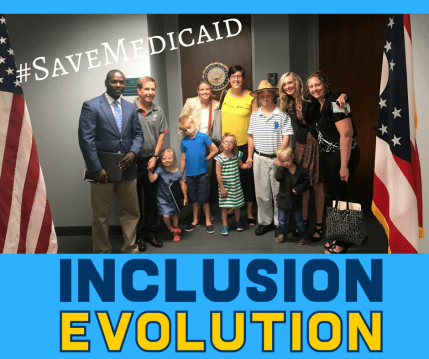
I’ve fully embraced my role as lead advocate in our household. I created this blog because of Troy, and will now train as a special education advocate to help other families. Although each of our loved ones with Down syndrome are unique and different, there are issues that bind our community together. We must stand together to ensure our loved ones get the support they need to be included in every aspect of society, whether that be school, employment, or our health care system. Five years ago, I couldn’t imagine myself presenting in front of my state legislature about a bill that I advocated for, but this fall I will do just that.

Read a Related Post Here: 5 Ways You Know You’ve Become Your Child’s Best Advocate

Even Troy’s twin brother already has a sense of advocacy. Hunter gives me daily reports about what Troy did in school, and is quick to tell us what Troy is saying when we can’t decipher his sometimes jumbled words. They say siblings of individuals with Down syndrome often lead lives of service and honor, and I can see that already in Hunter’s actions.

Troy leads by example. He’s always polite and congenial. When Troy walks into a room, everyone takes notice. He’s loud and boisterous. He wants to be heard, and he will. As will we!

I don’t think much about how life could have been with two typical boys, but when I do I realize we may not have been as close, strong, and empathetic as we are now.

How has Troy transformed our family? In countless, magical ways…that’s how! 


How Military Service Creates a Secure Future for Our Son with Down Syndrome

Our family has a love-hate relationship with the United States Military. It’s taken us away from family and friends and each other. It’s lead to the death of good friends and painful memories of war and deployments. It’s also taught us what’s important in life: honor, duty, and living every moment like it’s your last.

As one would expect our relationship with the military leans more on the “love” side as my husband gets closer and closer to retirement. If I’m honest, the military has afforded our entire family a brighter future. For my husband and I, who grew up working poor, it’s meant reaching the American dream debt-free. More importantly, for our son with Down syndrome it means a exceptional life and secure future, even after we pass away.

Read Related Post Here: Open Letter to My Twin Sons, One with Down Syndrome, On Their 5th Birthday

Signing up for military service means making sacrifices 99% of Americans wouldn’t even consider, but the rewards are also worth mentioning. For the sake of this blog I’ll limit those sacrifices and rewards to those pertaining to our son, Troy, who has Down syndrome. The goal of this post is not to recruit you for military service (LOL- like I could even if I tried), but to give you a glimpse of life in the military with a child with a disability.

Taking Care of the Future Today

I’ll start at the end first, because I’m just so excited and want to share what 20 years service with the United States military will get Troy. One of the first thing someone (I don’t even remember who) told us when Troy was born is that he would have free Tricare health care for life. Many individuals with Down syndrome are eligible for Medicaid when they become adults, but having a secondary insurance means Troy’s health care will be secure. Read more here.

The other huge perk is my husband’s retirement pension. On the day he retires we can request that Troy receive the pension at my husband’s death, rather than myself. This seems like a no-brainer to me. Troy is likely to out-live both Trenton and I. Likely, I’ll always be able to work and support myself, but Troy may need extra financial help throughout his adult life. Just beware and be prepared! You will need to open a “First Person Medicaid Payback Trust,” to ensure your child’s SSI and Medicaid benefits are not put at risk. As the title of the trust states, the funds in the trust upon your child’s death will be paid back to Medicaid. Learn more here.

Read Related Post Here: Brother Urges Parents to Prepare Typical Siblings for the Future

Free Socialized Health Care

We always joke that the military is the only place in America where you can experience socialism, even though we’re fighting for capitalism. I’ve had friends complain about their health care through the military, but really?–it’s FREE. Everything is free. My husband doesn’t have a deduction out of his paycheck for health care. When you have a child with Down syndrome and multiple health problems, that is HUGE. We don’t pay a dime for medicine, specialists, surgeries, private therapies, or orthotics.

I have too many civilian friends to count who don’t have their child with Down syndrome in private therapy or orthotics because it’s so expensive and their insurance doesn’t cover it. I can’t imagine our insurance not covering our child who has Childhood Apraxia of Speech and poor gait/low tone. I never have to beg for a referral or service. In fact, I usually tell my son’s military pediatrician which private specialists and therapists I want him to see and they sign the referral no questions asked. Troy even has his own case manager who I absolutely love. If we ever have a problem with a referral or a question about anything I just call her and she takes care of it.

Troy with his Daddy

The Exceptional Family Member Program

Every branch of government has this fabulous program called “The Exceptional Family Member Program” (EFMP). The program was created in the 1980s to help military families identify the medical and educational resources they need at their current duty station. The “exceptional family member” can be anyone in the family who needs extra assistance. I had a friend who battled breast cancer in her twenties and her military husband was able to get home health-care resources through EFMP. I also had a friend who’s child had a speech delay, and was able to get therapy services through EFMP. It’s worth noting that everything I mention here is absolutely FREE.

When you’re moving around a lot (we’ve moved 4 times in 10 years of marriage), you have added stress with a child with a disability. I’m constantly worried that our next duty station may not have a good children’s hospital or private therapy services or an inclusive school for Troy. Although the military mission is always paramount in any move, EFMP takes a family’s documented needs into consideration. We’ve made a point of staying away from states that are known to do a poor job educating and employment individuals with intellectual disabilities. Read about EFMP here.

Respite Support

I’m often asked how I survive with three kids, a husband in medical residency, and no family support. Our closest family members live 500 miles away, which is the closest we’ve lived to family since my husband enlisted at 18-years-old. The answer I give them is wine and my respite provider. Everyone who qualifies for EFMP is guaranteed a highly-qualified respite provider and 40 hours a month (in the Air Force) of free babysitting. This is my saving grace!

Our providers must have some professional connection to children with disabilities. We’ve had nurses, clinical psychologists, and teachers. The respite providers are constantly in training; learning the newest child care research and medical techniques. Their also highly compensated at a price I would never be able to afford. This ensure high quality care that I can depend on. I’m always free on a Saturday night!

Read Related Post Here: The Quiet Before the Storm as My Son with Down Syndrome Grows Up

I still worry often about our military future and Troy. I worry about getting out or staying in, and the impact on all three of our kids. But the military has forced me to live in the moment and accept that change is inevitable. For Troy, who hates change and transitions, military life may help him face his fears and become a more flexible adult. It has for me!

Are you or do you know a military family with a child with special needs? How has your experience been? I’d love to hear about your military story. Comment below! 


Our Family LENDs Unique Perspective to Medical Professionals

The Monday after a big birthday party is not the best day to have strangers visit my home. My house looked like Toys’R’Us exploded inside, and there was still homemade icing stuck in awkward places throughout my kitchen. Still, I made a promise, and I’m glad I did.

It was a “Day in the Life” of a family with a loved one with Down syndrome.

The Leadership Education in Neuro-developmental and related Disabilities (LEND) program asked our family to invite a clinical psychologist and disability self-advocate into our home so they could see life outside your typical treatment facility.

Clinical Psychologist, Kaitlyn Eichinger, with Troy’s brother, Hunter

“I’m so excited to get to see life from you and Troy’s perspective. I think this will change how I do my job in a clinical setting,” explains clinical psychology graduate student Kaitlyn Eichinger.

Most doctors, therapists, and clinical psychologists view disability from a pathology standpoint. When your goal is to diagnosis and treat, it’s sometimes hard to see past the disability. Also, medical professionals can sometimes forget that the parent is an expert on their child’s needs, and can provide invaluable insight.

Read Related Post Here: Ending Organ Transplant Waitlist Discrimination 

The LEND program recruits graduate students, post-doctoral fellows, and community leaders for a year-long interdisciplinary training program focused on improving the health of children with developmental disabilities. Spending time with families as part of the Family Mentor program is only part of the year-long LEND training.

Cincinnati Children’s LEND program is one of 52 programs nationwide, but our local program is the first in the nation to include self-advocates as trainees. Rachel Rice will meet with our family alongside Kaitlyn Eichinger, and will do all the same coursework.

Self-advocate, Rachel Rice, with Troy

“I like to prove people wrong about my disability. I was told I’d never be able to do office work, but I’ve worked in an office setting for the last five years and now work with Warren County Board of Developmental Disabilities,” says Rice. I thought Rachel brings a great perspective herself. It’s not often I get to hang out with adult self-advocates with disabilities other than Down syndrome, and Kaitlyn and I both agreed she rocked it!

Read Related Post Here: The Link Between Sleep and Learning

Troy and his siblings were excited to welcome Kaitlyn and Rachel into our home. They showed both ladies that Troy is more alike than different, and is an invaluable member of our family.

The two trainees will get a chance to meet with us two more times, in settings outside our home like a therapy session or playground. I’ll be sure to continue to share our journey with Kaitlyn and Rachel. Although they may only be getting one family’s perspective, it’s still gives them a glimpse into the personal lives of their patients.

There’s LEND Programs in all 50 states. If you’re interested in becoming a Family Mentor click here.


Open Letter to My Twin Boys, One With Down Syndrome, on Their 5th Birthday

Dear Hunter and Troy,

Five years ago today you entered our life in dramatic fashion and changed us forever. Your first five years have been full of adventure and love, and we can’t wait to see what joys await in your future.

Below are memories from a time in your life that you will likely never remember. Treasure these memories and each other! 

Hunter (left) and Troy (right)

You won’t remember when your Daddy and I found out you were TWINS…and BOYS! We were so excited! We cried tears of joy, and started planning the adventures we would have with our little “man cubs.”

You won’t remember your traumatic birth. The worry in our faces as Baby A, Hunter, had difficulty breathing at first and Baby B, Troy…well, we knew as soon as we saw your beautiful face, and we cried tears of fear.

You won’t remember how your Daddy and I watched you sleep snuggled together in your bassinet. We called you the “baby symphony,” because your sweet infant breath sang a duet to us nightly.

Read Related Post Here: What I Should Have Asked When My Son was Born with Down Syndrome

You won’t remember how proud your Great-Grandfather was of you both. He would tell me of his own special bond with his brother who was injured at birth and had an intellectual disability; how it made him a better man. Papa passed away when you were six months old.

Troy with Papa and Hunter with Nanny

You won’t remember how you first discovered each other out of the womb; looking into each others eyes with a reassurance that life together would be enough.

Thing 1 (Hunter, left) and Thing 2 (Troy, right)

You won’t remember your unique personalities blossoming. Hunter we jokingly called “cling-on,” because he loved all things Mommy. Troy was our #boyfilledwithjoy, never complaining; taking life as it came–hardships and all.

You won’t remember reaching those all important first milestones, and how I studied every difference. Hunter mastered these milestones effortlessly, while Troy battled twice as hard for twice as long to keep up.

Read Related Post Here: Our Birth Story: Double the Blessing, Each One of a Kind

You won’t remember your obsession with simple joys like a bubble bath, sweet children’s books, and a train chugging past our home.

You won’t remember how you both treated Troy’s thrice weekly therapy sessions like just another day at the playground. Never complaining, often laughing and snuggling therapists. Teaching me that although disability can often bring hardship, it can also bring great reward and should be treated like a natural part of life.

You won’t remember your secret twin language. How Hunter would lead Troy in a conversation and then translate what was said to me in great detail.

You won’t remember the endless tickle-fests and wrestling matches with Daddy. Then again, you just may remember because they’ve never stopped.

You won’t remember your first day of preschool. How I followed your school bus to school with such trepidation, but so excited for you to start this journey together.

Read Related Post Here: The Quiet Before the Storm as My Son with Down Syndrome Grows Up

You won’t remember the day your baby sister was born. Hunter, the proud oldest brother, never letting her go; while Troy tried ignoring the new addition hoping she might go away. LOL

The day Cora was born

You won’t remember how your mother transformed from a stay-silent, conformist to a fierce protector and advocate of inclusion for children with disabilities. And your father’s transformation to a more empathetic doctor.

Troy and I meeting with Senator Portman’s staff

You won’t remember Hunter becoming a natural leader that often parented better than I did. Or how Troy impressed every adult with his always appropriate “please” and “thank you” and “your welcome.”

You won’t remember how much fun we had just being together.

You won’t remember, but your Dad and I will. We’ll remember and hope that you both carry these formative years with you throughout life. Don’t forget who you are and where you came from. Remember the simple things in life, fight for what’s right, and love fiercely.

We love you!

Your Mom and Dad

I’d love to hear from parents of younger and older children. If your child is younger: what will you remember about these days? If your child is older: what advice would you give parents like me just starting on this journey?