What I Should Have Asked When My Son was Born with Down Syndrome

We had a lot of questions when Troy was born. 

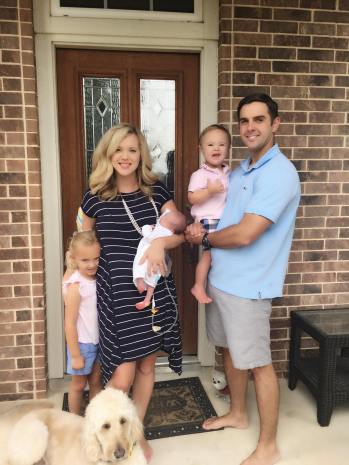
Troy on the right, with his typical twin and Trenton

Why was this happening to us?

What health problems will he have?

Would he be high functioning?

Will Troy ever play with his typical twin brother?

Would we ever be happy again?

All of these questions focused on how Down syndrome would negatively impact our lives. Most of them revealed my husband, Trenton, and I’s utter ignorance when it came to Troy’s diagnosis. Some of our doctors and a quick Google search didn’t help matters. They seem to perpetuate only the pathology of Down syndrome; completely missing the beautiful life and possibilities that I held in my arms.

Of course hindsight is 20/20 and the reality is, just like parenting any child, you never know how your life will change until you walk down that path. So, if I could go back to that sad, scared mama almost five years ago I’d whisper one question into her ear:

How could Troy transform our family for the better? 

It’s not a question that doctors or Google could ever answer. It’s not a question that even came to mind in the midst of the overwhelming grief of what should have been. It wasn’t until I could let go of the should’ve/could’ve beens, that I realized how beautifully made my son is and how Down syndrome can open unexpected doors for myself and my family.

Acceptance of Down syndrome became our silver lining. 

Ironically, we didn’t accept Down syndrome that easily. We wrestled with the idea of it constantly those first few months of Troy’s life. It wasn’t until we accepted our son, that we accepted Down syndrome. You may have heard the sayings “my son is not Down syndrome” or “when you’ve met one person with Down syndrome, you’ve met ONE person with Down syndrome.”

These sayings are at once completely true and false. It wasn’t until Troy’s personality revealed it self (that first smile, the way he looked around for his brother whenever he wasn’t near, later when he woke up early every morning just like his Daddy, or loved to bust a move like his Mama), that we realized we would be happy again. Troy is unique and ours. Down syndrome doesn’t define him, but Down syndrome has found a place in our heart and has emboldened us to live better.

Read a Related Post Here: How Having a Son with Down Syndrome Pushes Me to be “That Mom”

Our family has become champions of Troy and all people who are different or vulnerable to misunderstanding. My husband had just graduated from Medical school when Troy was born. All he saw when he looked at Troy then was health problems related to Down syndrome. Now, he sees someone who loves life in spite of all that. This has changed the way he doctors, and sees his patients. It’s made him more compassionate and caring.

Hunter and Troy, almost 5-years-old

I’ve fully embraced my role as lead advocate in our household. I created this blog because of Troy, and will now train as a special education advocate to help other families. Although each of our loved ones with Down syndrome are unique and different, there are issues that bind our community together. We must stand together to ensure our loved ones get the support they need to be included in every aspect of society, whether that be school, employment, or our health care system. Five years ago, I couldn’t imagine myself presenting in front of my state legislature about a bill that I advocated for, but this fall I will do just that.

Read a Related Post Here: 5 Ways You Know You’ve Become Your Child’s Best Advocate

Even Troy’s twin brother already has a sense of advocacy. Hunter gives me daily reports about what Troy did in school, and is quick to tell us what Troy is saying when we can’t decipher his sometimes jumbled words. They say siblings of individuals with Down syndrome often lead lives of service and honor, and I can see that already in Hunter’s actions.

Troy leads by example. He’s always polite and congenial. When Troy walks into a room, everyone takes notice. He’s loud and boisterous. He wants to be heard, and he will. As will we!

I don’t think much about how life could have been with two typical boys, but when I do I realize we may not have been as close, strong, and empathetic as we are now.

How has Troy transformed our family? In countless, magical ways…that’s how! 


Down Syndrome Blogs Sure to Inspire

In the beginning there was Google. It’s what every new mom turns to these days when they receive their child’s Down syndrome diagnosis. Like it or not, moms want information and Google provides it fast.

That’s why it’s so important that advocates like myself and the ones you’ll meet below win the Google Wars. Out-dated, misinformation about Down syndrome is rampant on Google. But slowly more and more blogs, as well as national Down syndrome organizations are putting an end to this misinformation. Some argue that the blogosphere is flooded with too many new moms sharing their journey with a child with Down syndrome. I say bring it on!

Read Related Story Here: Why I blog

It’s important that we advocate and share our personal stories, so that new moms and strangers of Down syndrome develop a new, better perspective of people living with Down syndrome. I started Inclusion Evolution to provide one more glimpse into the diverse world of Down syndrome. If I inspire one person, change one mind, then my goal is met. Other bloggers are doing the same, and below I share my top 10 favorite.

10 Most Inspiring Down Syndrome Blogs: 

Cedar’s Story:

This has got to be the best diagnosis-centered blog on the web. One-year-old Cedar’s mom, Dawn, does a fabulous job sharing hundreds of diagnosis stories. The first place I turned when I learned about Troy’s diagnosis was the web, and I wish then that I would have had Cedar’s Story. Click here to read a diagnosis story from the Ivory Coast in Africa.

Dawn and Cedar from “Cedar’s Story”

News Anchor to Homemaker:

Jillian Benfield’s raw emotion and eloquent words will have you coming back for more. I feel she and I could be best friends, and I don’t even know her. As I began reading her blog, I realized we had SO much in common. First, we both grew up in the same county in Florida. Second, we were both television journalist (albeit–she was much more successful), turn stay-at-home moms. But mostly it’s her first son, Anderson, who has Down syndrome that hooked me. Her “Mid-Week Moral” will cut you down deep, and bring you closer to her beautifully broken journey and your own.

Jillian, Anderson and Family from “News Anchor to Homemaker”

The Sassy Southern Gal:

Almost every blog about Down syndrome has a baby or toddler in its starring role. But I’m hungry for sneak peeks into Troy’s future, so I’m always looking for reads on teens and adults with Down syndrome. 17-year-old Rachel fills me with such hope for Troy’s future. She’s the star of “The Sassy Southern Gal,” written by her mother and my advocacy mentor, Jawanda Mast. Jawanda’s blog shows Rachel’s journey of inclusion from her elementary school years to her present senior year. Rachel is an amazing self-advocate, and the blog show’s this transformation. Check it out here.

Rachel from “Sassy Southern Gal”


Grown Ups and Downs:

Another fabulous blog from a mother of an adult with Down syndrome. Brought to you by the co-author of “The Parents’ Guide to Down Syndrome,” Mardra Sikora inspires young moms to always dream big. Her son, Marcus, is also an author and amazing self-advocate. Check out his children’s book, “Black Day: A Monster Rock Band,” and all his adventures here.

Marcus with his book “Black Day” from the blog “Grown Ups and Downs”

A Day in the Life with Down Syndrome:

This is a new blog (like mine) with an extra special mission. To share families’ journey with Down syndrome. You can submit your own story and also learn about Down syndrome resources on and off social media. The author is Meriah, who first inspired me with a cross-disability blog now called Two Thirds of the Planet. Using her own disability as a compass, Meriah provides a unique glimpse into life with a disability.

Meriah and Moxy from “A Day in the Life with Down Syndrome”

This Life I Live:

The blogosphere is dominated by strong women sharing stories about their beautiful children with Down syndrome. It’s rare to find a father’s perspective, so Rory Feek’s blog is a rare gem. He writes it like an open diary about his wife who recently passed from cancer, his country music career, homestead farming, and his youngest daughter, Indy, who happens to rock an extra chromosome. Feek plan to homeschool Indy. Check out the one-room schoolhouse he recently built for her here.

Rory Feel with his late wife and daughter, Indy

Lexi Loo, Lily, Liam & Dylan Too:

If you want more from a blog than just Down syndrome talk, then Stephanie’s parenting and lifestyle blog is your jam. It has the perfect mix of decorating tips, stylish clothes and toys, as well as updates on her son Liam who has Down syndrome. Click here learn about her son’s journey.

Stephanie and Liam from “Lexi Loo, Lily, Liam, and Dylan Too”


No BS About DS:

It’s common to find a Down syndrome blog that’s heavy on emotion, but as Troy gets older I can’t help but want more. Enter “No BS About DS.” Co-Author, Sruthi Muralidharan does a good job of including human interest pieces, but also scientific posts. Check out their Ask the Expert post with Dr. Brian Skotko here or their post about Miralax for Constipation here.

Sruthi Muralidharan with her husband and son, Tejas

I Am River

River is a little boy with Down syndrome that lives between the United Kingdom and Tanzania. His mom and author of “I am River” blog, Hayley has an amazing way of sharing their unique story through words and pictures. I love this blog for it’s international flair and amazing prose. Check it out here.

Hayley and River from “I Am River”

Down Syndrome Diagnosis Network 

My last pick for most inspiring Down syndrome blog comes from a volunteer-run organization and non-profit, Down Syndrome Diagnosis Network (DSDN). They have a great website with resources for moms with children from birth to age 5-years-old. But they also share personal stories on their blog from hundreds of parents across the United States. Check it out here.

What are your favorite blogs? Share in the comments section below!


“Born to Eat” Book Review Part 2: Benefits of Baby-Led Weaning for Children with Feeding Issues

“I want you to think about a food or texture that makes you feel ‘ick.’ Now, imagine someone bigger and faster than you pushing it into your mouth! Then, imagine you are strapped to a chair and can’t verbally communicate!”    

Speech and Language Pathologist, Nikki Henry, treats children with oral-motor and sensory disorders, and says the nightmare description above can exacerbate feeding issues. That’s why she’s a big fan of “Born To Eat,” a book that creates a whole-foods family centered approach to baby’s first bite.

You can read more about the particulars of this approach in the first part of my book review for “Born to Eat” here.

The book is based on baby-led weaning, which allows baby to explore a variety of flavors, textures and shapes in a child-directed manner.

Henry says this approach can be particularly beneficial to children with certain feeding issues, because it allows them to become familiar with and manage a variety of textures.

Henry cautions that this approach is not a “cure all for sensory issues” but she strongly believes some sensory issues may be avoided.

“The bottle, breast, or spoonful of pureed food goes straight to the back of the mouth. This robs the child of experiencing the preparation phase before swallowing. When an actual texture is finally introduced they do not know how to manage it, which can sometimes produce anxiety and avoidance of specific textures,” Henry explains.

3 Steps to Begin the “Born to Eat” approach with a child who is delayed or has feeding issues:

1. First, Henry says “identify where your child falls in his development.” For example, if your 6-month-old child is developmentally at a 3-4 month level, then they are not ready to dive into solids.

Since Troy’s first bite it’s been a family-centered approach

“Keep in mind that it’s not just about food in mouth and swallow,” Henry explains. Fine and gross motor skills are essential in a child’s readiness to eat.

Your child needs to be able to sit with little support, and must be able to bring food to his mouth independently. Henry emphasizes the child should sit upright in a highchair with foot support, and the caregiver should always be near and watchful.

2. Henry recommends continuing breast or bottle while introducing solids.

The “Born to Eat” philosophy is “food before one is just fun.” This mantra may be extended for children with Down syndrome, who are slower to develop. Henry says this means, at this point, solids serve as a tool or exploration and perfecting texture management skills, not to provide all of baby’s nutritional needs.

3. Lastly, start with safe foods outlined in the book.

Henry recommends finger-sized foods (2-3 inch sticks) that they can hold and independently mouth.  You can use larger chip size/shape foods as well (not actual chips).

“A good food safety test is if you can push the food into the roof of your mouth with your tongue it is okay.  With my daughter we did a lot of avocado, green beans (strings off), bananas and even steak!  When she was gumming the steak, we were confident that she couldn’t break a piece off but she definitely enjoyed all the delicious juices (and the nutrition it provided).”

Even children on gtubes can start BLW if they are cleared by their pediatrician.

“I do recommend oral exploration especially during the feeds to make the connection between the mouth, eating and feeling full.  If oral feeds aren’t allowed at the time, try mouthing a toy, a rubber spoon/fork, and/or a sensory chewing tool (I like chewy tubes),” Henry says of children with gtubes.

When a child has no oral stimulation for an extended amount of time, it can be a sensory shock when they do finally eat orally.  Henry says it’s important to know you child’s current skill level well and work closely with their intervention team.

Baby-led weaning allows our children to explore different textures, flavors, and shapes. Henry says this is the exact approach she’s taken with other oral-motor tools. The two approaches mesh well together, and will serve children well in the long run.


Disclosure: I received no compensation, sponsoring, financial incentive, or other inducements to write this article


Advocates Urge Congress to Increase Funding for Down Syndrome Research

We’ve learned a lot about Down syndrome since it was first identified 150 years ago, but there’s still a lot we don’t know. Now medical experts and advocates are urging Congress to properly fund research to better the lives of people with Down syndrome.

Self-advocate, national speaker and actor John Franklin Stephens urged the House Appropriations Committee on Wednesday to increase funding for Down syndrome research:

“I don’t feel like I should have to justify my existence, but to those that question the value of people with Down syndrome I would make three points. First, we are a medical gift to society. A blue print for medical research into cancer, Alzheimers, and immune system disorders. Second, a Harvard study found that people with Down syndrome and their families are happier than the larger society. Surely happiness is worth something. Thirdly, we are the canary in the eugenics coal mine. We are giving the world the chance to think about the ethics of choosing which humans get a chance at life,” Stephen’s proclaimed. 

Read Related Post Here: Self-Advocate Uses Fame to Spread Message of Inclusion

If you haven’t had a chance to hear his entire testimony, it’s worth the 8 minutes! Fellow advocates in attendance told me his speech was extremely moving and brought most in the committee room to tears.

According to Global Down Syndrome Foundation CEO and President, Michelle Sie Whitten, “there’s a significant disparity in Down syndrome research funding compared to other less common disorders.” The National Institutes of Health (NIH) decreased funding for Down Syndrome from $29 million to $14 million from 2001 to 2009. Whitten says this decline happened while funding to the NIH actually increased.

DS-Connect: What You Can Do Today to Help with Down Syndrome Research

Self-Advocates like John Franklin Stephens and even my 5-year-old son, Troy, stand ready to participate in research that will improve the lives of people with Down syndrome and all of humanity. A simple way they’ve done this is through DS-Connect.

It literally took me 5 minutes to complete the online NIH health registry with Troy’s information. Families can use the registry to connect with researchers medical providers, express interest in participating in clinical studies, take confidential health surveys that researchers can use to better understand the health of people with Down syndrome. Click here to join DS-Connect registry.

Another great opportunity to get involved is the Human Trisomy Project through the Linda Crnic Institute. By enrolling your loved one, researchers can better understand why people with Down syndrome are protected from certain medical conditions while being more susceptible to others. Click here to learn more.

Why should your loved one be involved in Down syndrome research?

Because of these startling facts:

100% of people with Down syndrome will have the brain pathology of Alzheimers by age 40.

30% of people with Down syndrome suffer from immune disorders

30% of people with Down syndrome fought leukemia; while all other types of cancers remain rare or non-existent for this population.

The big question is WHY? Researching Down syndrome may unlock answers to America’s top killers.

“Despite our advocacy, funding has been flat over the past decades. Despite being the leading cause of developmental delay, our funding has plummeted while NIH budget increase” laments Whitten at yesterday’s appropriation’s hearing.

Read Related Post Here: Ending Organ Transplantation Discrimination For People with Disabilities 

Executive Director of Linda Crnic Institute for Down Syndrome, Dr. Joaquin Espinosa, made the argument to committee members that increased NIH funding would also do more than help unlock clues to Alzheimers and cancer:

“There are 4 times as many people living with Down syndrome today as in the 1950s. Life expectancy has more than doubled since 1980s. People with Down Syndrome are here to stay. Simple interventions improved life expectancy. With specialized research people with Down syndrome will live longer, better lives. How much longer should people with Down syndrome wait to get their fair share of the biomedical research dollars? I think the time to act is now!”

Again, John Franklin Stephens brought the message home as a man living with Down syndrome:

“Let’s be America. Not Iceland and Denmark. Let’s solve problems and find solutions, not allow for “final solutions.” The number of people with Down syndrome is getting larger, not smaller, and so is the need. The American citizens living with Down syndrome deserve to know that their is funding and medical care available to them that allows them to reach their full potential. Let’s make our goal to be Alzheimer’s free, not Down syndrome free,” Stephen’s implores!

Members of both parties seemed overwhelmingly supportive of Stephens and other advocate’s plea for more NIH funding. The House Appropriations Committee will now move to vote on whether or not to increase funding for Down syndrome research within the NIH budget. I’ll keep you up-to-date on their vote.

Have you registered your love one with Down syndrome for DS-Connect or the Human Trisomy Project? Tell me what you think below.


“Born to Eat”: Inclusion Starts with Baby’s First Bite

Sometimes the biggest barrier to inclusion for individuals with disabilities is their family.

For fear that their child will be hurt, parents can sometimes overcompensate and overprotect.

I’m guilty of this sometimes, even though I try really hard to have similar expectations for Troy as I have for my typical children. It’s human nature, I suppose.

But we must practice what we preach! If I want Troy to be included in our community, then I need to create equity and inclusion within our home.

Family meals are a simple way that I’ve created equity in our home.

Troy is expected to help set the table, sit with his family during meals, and help clear off and clean the table when we’re finished.

Seems like a simple routine, and he’s pretty proficient at this now. But believe me when I say it took YEARS of throwing food and Troy getting up and down to clean up the mess before he mastered this routine.

My approach to this routine all started with Baby Led Weaning. The new book, Born to Eat,” creates a whole philosophy surrounding BLW and family-centered meals that really piqued my interest as a special needs mom.

May be you’ve heard of it, but don’t think it’s appropriate for children with disabilities. It does seem intimidating at face value:

  • When child shows readiness for solid foods, parent presents whole food options (that are appropriate in texture for an infant) that the rest of the family is already eating. (no time or money sent on baby food jars, or making your own baby purees)
  • Parent decides what, when, and where a child eats.
  • Child decides how much and if he/she wants to eat.

-Cue the worried parent-

Listen, I’ve been there.

We all worry that our child isn’t eating enough, but this philosophy is really about honoring self-regulation and self-reliance in your child. Two attributes that are so important to the success of individuals with Down syndrome.

The best part is “Born To Eat” takes a nonjudgmental approach. You can dive in, or just implement parts of baby-led weaning.

Read Related Post Here: Born to Eat Part 2: Benefits of Baby-Led Weaning for Babies with Feeding Issues

But what about oral motor issues, you ask? It’s true, many babies and children with Down syndrome have feeding issues.

“Born to Eat” author, Wendy Jo Peterson, says you should always consult your pediatrician before starting any solid foods with your child, but a whole foods approach may actually benefit a child with oral-motor sensory issues.

Most feeding experts that Wendy Jo works with feel that empowering a child early on to work on these skills is important, but all agree that this may not be appropriate for all infants all the time.

Every parent has to navigate these waters on their own and seek the support of feeding experts who truly understand a Baby-led feeding approach.

Dr. Katja Rowell is an excellent resource for parents who wish to try a baby-led approach, she was one of “Born To Eat’s” technical readers, and fully supports a BLW approach to feeding infants.

The American Speech-Language and Hearing Association also has a blog post on the benefits of BLW here.

Children often begin to develop picky eating habits early on. “By using varied textures and flavors early on infants (when they are most apt to be accepting to new things) can become acquainted with these flavors and textures.

“Picky eating to a degree is natural,” Wendy Jo explains.

Understanding the Division of Responsibility (coined by Ellyn Satter) can help every parent navigate these waters and learn how their own responses contribute to picky eating.

Read Related Post Here: Our Birth Story: Double the Blessing, Each One of a Kind

In the book, “Born To Eat” shares examples of positive language around the dinner table, and reminds parents that children have the right to what they choose to chew or not.

The less we react the less the table becomes a battleground. Food should not be a battleground or used as punishment or reward.

“Food only becomes an issue when we make it an issue,” author Wendy Jo Peterson explains.

Embracing a family-centered, whole-foods approach is a simple way to start on the path to self-regulation and self-reliance in our children with Down syndrome. Both of these attributes will serve them well in other parts of their life.

In Part 2 of this book review, I’ll talk to a Speech and Language Pathologist who will walk us through the specific benefits of a baby-led weaning approach and how to start on your child on solid foods.

Disclosure: I received no compensation, sponsoring, financial incentive, or other inducements to write this article

How have you taken a family-centered, whole foods approach to feeding your little one? I’d love to hear your food stories below!